2024 Why Practice?

/* hello friends, my apologies – these posts somehow ended up in drafts when I thought I sent them. Call forth a study of awareness and one clearly meets their own unconsciousness!! They are best read before the new year posts. Thank you for reading!!*/

As the new year begins we will  embark on a journey through a leisurely study  of Sankhya philosophy as a tool to enrich our personal  yoga practices.  Sankhya is a philosophy rooted in India. It’s prevalent in the bhakti yogic text of the Bhagavad  Gita.  It’s foundational for the understanding of yoga’s sister discipline – the healing art of Ayurveda.  When I attended teacher training – we had to learn it.  But in practice I found it, limiting, laborious confusing, even as I understood on some deeper level that my assessment was off because I never gave it due attention.

So I’ve decided to spend time in my practice now exploring sankhya within my daily practice…and I thought you might enjoy being with me on that journey. It’s complex, and like our exploration of the koshas will unfold over months.

When working with the  dimensions of the classical root teachings around yoga – I find it imperative to practice with  a teaching – in order to really understand its relevance to the practice.   The intellectual exercise alone is not sufficient.

For me that means not a simple one-time design of a sequence – but a dedicated period of time that I practice with it daily.  A proverb from my teacher “through repetition, the magic is forced to rise”.  This is true in all aspects of our practice. 

Why  would we want to deepen our practice by digging into the realms of philosophical thought and then trying to apply them on the mat? 

Through the classical practices of yoga we yoke to the infinity of mind.  From Patanjali Yoga Sutras: 

तदसंख्येयवासनाभिश्चित्रमपि परार्थं संहत्यकारित्वात् ॥ ४.२४ ॥

tadasaṃkhyeyavāsanābhiścitramapi parārthaṃ saṃhatyakāritvāt || 4.24 ||

Yoga Sutra IV.24  The mindstuff itself reflects the infinity of the mind and acts as the unifying agent of the countless individual manifestations.

As we go through practicing Sankhya we will uncover the pivotal nature of the mind stuff and the higher mind.  This sutra touches on that…As we get clear – our mind will not reflect our neurosis, our insecurities or our fears.  Our mind will reflect the infinite state of consciousness.  At the point that it reflects that it generates a perception or union rather than division.  Of “one” rather than a multitude.  In that state we become super high functioning. 

What does that have to do with asana?  What will be revealed in an intimate way is that your physical body is intimately interconnected with the infinity of mind.  Yep.  Think healing on a grand scale.

What does that high functioning unified state look like?

Good meditation

Staying calm and effective while in turbulent or painful conditions.

Finding creative solutions

Inspired action and direction.

Becoming true. 

Transforming the body.

I like becoming true best. In the moment of yoga when we experience union we know who we are – not just spiritually but what we are here to do physically.  And to keep this out of the abstract – let’s say it clarifies purpose, it renders understanding in our lives, it opens possibilities- to experience the truth of who we are in tangible direct ways. 

It’s tempting to think we know who we are.  But the identity – the truth of ourselves is ever expanding, constantly changing and beyond any cultural definitions.  The world will always tell us who it wants us to be.  Yoga will always draw forth who we can be.  With discipline, understanding and wisdom yoga reveals a pathway through which those two apparently differing identities can be yoked together and cultivated as a pathway of personal growth and mastery.

The gift of approaching a study like Sankhya is that it becomes a tool through which we can tweak and adjust and fine tune our journey into and through this kind of dynamic expanding grounded  Self-expression.

In the map of Sankhya we will discover the poles of higher consciousness (simplicity) and grounded physical experience (complexity).  The fulcrum between the two is the mind.  So we will discover – as Patanjali shares with us in the sutra above that what occurs in the mind reaches into the experiences of the most fundamental sensory and action-based functions – and also reaches into the depth of what is often called the “Self”

We can experiment with this.  Meditate for 5-10 minutes before doing your self-practice. Observe your experience on the mat from a sensory perspective with and without meditating first.  And then continue that.  Maybe try it for a week, and then take a week off. Listen for a rhythm of your own which helps you explore what meditation does for your asana practice. It’s not unusual to have physical breakthroughs after deepening your meditation practice.  For this exercise  you would probably want to consider working with  a classical form of meditation like Vipassana. 

————————————————————————————————————————

Why practice?  What’s the point of incorporating the teachings from the so-called source texts.

Not relevant.

I have heard this many times as a teacher and a student.  That the classical teachings are not relevant.  Before we set sail on the ship of sankhya, I thought it would be helpful to consider why “Not relevant” is not the answer.  For this it’s helpful to revisit the folklore around the development of hatha yoga, and turn our vision towards how a so called “sacred text” can influence our practice in a significant way – a way worth the time it takes to incorporate such study into our practice.

Hatha Yoga was said to emerge among the untouchable caste in India sometime ago.  The untouchable caste was not permitted to attend or be in association with those who were performing sacred rituals.  They weren’t permitted anything at all of the spirit.  They weren’t permitted to honor God in any way that was known or acceptable at the time.  Humans do this.  They exclude.

There is a lot of power in spirituality.  To know and have a relationship with “God”.  People with power like to restrict access to that to a selective group.   And so, in India it is said that Lord Shiva (a a God who had some physical existence as well) taught Hatha yoga to the untouchables as a form of worship that could be secret,  and that they could not be prevented from performing.   Note:  this is very rough explanation of a very complex historical, social phenomenon.  It suffices for a paragraph, but I do encourage greater study. 

The point I’d like to make is that Hatha Yoga was designed to connect people with sacred truth – which is beyond our intellects, beyond our brains, beyond our imaginations.  It’s only found through revelation.  Hatha Yoga is an equalizer.  Anyone can practice in such a way that the doors to revelation can open.   The importance of lineage – if you have heard of that – is that it ensures that the practice descends from teacher to student in such as way that the sacred opening is still available.  It’s not obscured.  Once again, it’s very likely that there are those out these who would like those doors to relevation to be obscured or want to claim the power of the practice for themselves.  But staying true to the sacred truth – the essential truth ensures that you will be moving towards the truth. 

What does that have to do with sacred texts?  And by that, I mean texts that have some connection to those original sources.  Patanjali’s Yoga Sutras, The Bhagavad Gita, the Hatha Yoga Pradipika and so on. 

By studying them yourself…it reinforces that your will move you  in the direction of the truth.  When we were told we had to study Sanskrit in my teacher training in 1999 – we questioned this.  Isn’t it a dead language (well, I think it’s being resurrected by the worldwide yoga community)?  There were a few points made in the conversation:

By reading these texts, we didn’t have to rely on anyone else’s interpretation. 

Even if we didn’t study  Sanskrit, we were told that we should read at least four different translations to experience the broad scope of meaning contained in the original worlds.

Sanskrit is said to be vibrational – it came into being when people were first trying to use the sounds of the voice to communicate.  Because of that – the feeling behind the words can be experienced.  It opens the door to a supra-verbal understanding of the human in the cosmos. 

The texts open up different ways of seeing life and practice our place in the  cosmos and the power that each and everyone of us has to transform ourselves and the world we live in.  The study creates experiences in the mind reflective of what asana creates in the body.  The body is also a reflection of what we access with the mind.  They are deeply interwoven.

In practice – reading sacred texts, even in our first languages – is difficult.  Because the truth contained in a true source text is so vast it’s like a holograph – it contains everything in each microscopic unit.  At first we may not be able to read it at all, because on the surface no meaning comes through.  As we practice – we gain clarity and the meaning of the texts becomes more accessible. 

Processing…
Success! You're on the list.

Designing an Integrated Practice using the Map of the Five Koshas

*note – there are links to previous posts about the koshas below for your reference*

Moving towards the experience of yoga will always involve a bringing together, a yoking together, an integration. After journeying through an anatomical map like the koshas, there is benefit from integrating the information into our practice. Such integration brings individuality to our practice –  no two people integrate ideas into their practice the same way. Consciously integrating the koshas into your practice will create your own beautiful personal yoga mosaic  –an array of harmonious proportions uniquely adapted  for your life.

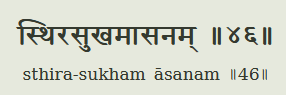
The classic teachings of yoga – taken holistically – are an invitation to develop skillful means. To learn through practice to rein together the forces acting within and without –  to become artful and harmonious co-creators. A sustainable  and integrated practice is built on working with our practices in harmonious proportions. The advantage of a sustainable practice is longevity – it stays with us our whole lives. In classical yoga practice this is ideal as it provides an enhanced relationship to our bodies and lives through times of change. The golden ratio establishes harmony and ease. It’s about  a state of interrelationship  which -like architecture -brings strength and stability.  In sutra 2.46 of his Yoga Sutra, Patanjali calls this the stable joyful seat. (tr. The seat should be stable and joyful).

What does this have to do with the koshas? A practice designed to address each of the koshas will create a stable practice in which all dimensions of ourselves become integrated.

To do this, we can construct a chart of the practices we want to explore that will develop each of the koshas. These are practices to bring the other parts of yourself into your practice is deliberate way.

Then select practices for each kosha that you would like to develop at a given time. Then, decide how much of each is appropriate to start out with and adjust it based on your needs at a given time – maintaining the presence of all five. Examples – when I was teaching yoga full time  asana was 1.5 hours a day and everything else was 5-10 minutes a day – or once a week or month. Now, my life needs less physicality and more inner peace. I meditate 45 minutes and my asana practice is sometimes only 20 minutes. You know that the practice is out of balance by your experience of the koshas. So, if I try to do 1.5 hours a day of asana right now – my mind chatter increases dramatically. If I tried to do an hour of meditation in my teaching days, I would fall asleep. Now, meditating awakens me. It’s important to note that it also needs to be in proportion to your lifestyle.  When I worked in corporate America, I also needed very intense asana.

You will know you are succeeding in creating a harmonious balance if your practice is sustainable (meaning – you are able to fulfill the personal commitment you have made over time) – and you will experience the wondrous personal transformation that is the promise of yoga – and that will occur not only on your mat but also in your relationships, your work, your creativity your passion. 

Introduction to the Five Sheaths

The AnamayaKosha

The PranamayaKosha

The ManomayaKosha

The JnanamayaKosha

The AnandamayaKosha

If you would like to explore ways to work with the physical body to integrate the koshas, my associated newsletter will be posted on my facebook page for NatalieteachesYoga. To receive future newsletters with alternate approaches to what is shared in the blog post, please sign up below. I promise you will not receive marketing emails from me. These are designed to be educational.

Processing…
Success! You're on the list.

About the Body: Headstand

Let’s not take a headstand out of the yoga practice!  Find a good Iyengar instructor and learn it from them! 

Around 2012 there were rumors that yoga  teaching  insurance would no longer cover classes where headstand was taught.  It was a rumor.  A  threatening one to us old school teachers who were under the gun at the time.   But headstand  is a posture which is open to debate.  In the classical schools it is the king of all postures.  In more modern accommodating classes, you may not ever encounter it. 

I am in the first group.  I studied and taught Jivamukti Yoga which has roots in the Krishnamacharya lineage.  Krishnamacharya was the root guru of three notable  traditions originating in his students  – Ashtanga (associated with K. Pattabhi Jois), Iyengar (associated with B.K.S.  Iyengar) and yoga as taught by T.K.V. Desikachar which he called “yoga”. 

At Jivamukti we practiced headstand for five minutes a day, and it was taught in almost every class.  I feared it deeply.  When K. Pattabhi Jois came to New York to teach I walked through my fear and took some of the classes the classes.  The first day he singled me out and did not let me run to wall during headstand.  He held me off balance in the posture for 12 very, very long breaths.  I was sweating bullets and seeing my life pass before my eyes.  The next day, he walked over, put in me in the headstand in a balanced way, and then walked away.  From that moment forward it was a favorite.

This was how it was taught in those days.  For me, this  was very effective. 

I’d had a long-standing issue in which  my cervical spine would lock up and cause much pain to me.  Going to the chiropractor helped but nothing really changed. 

I walked out of the Puck building that day and stopped on the sidewalk to stretch my post headstand neck.  As I stretched my neck the spaces between the cervical vertebrae expanded and my neck elongated in a way I’d never felt before.  I was already sold on yoga, but with that opening I was sold in a new way.  My curiosity about Patanjali, ancient sage of yoga and so called “jungle doctor” had been unleashed in my practice in a whole new way.  There was healing to be found in yoga.  The world looked a little different.

As a body worker and Shiatsu therapist I suspect in a casual unproven way that the pressure on my cranial sutures released some stress patterns in deep levels of my fascia.  (but don’t try this at home on your own, find a good teacher!). 

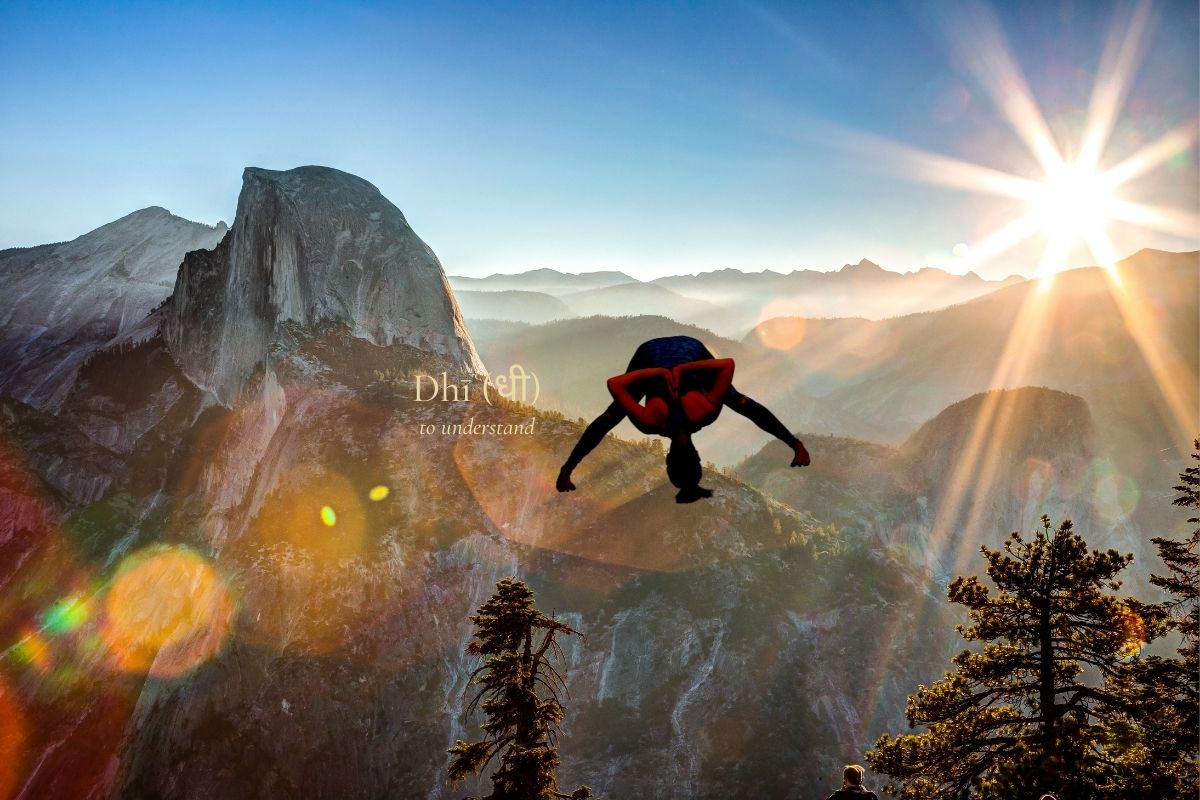
Remember headstand is just Tadasana, mountain posture turned around.  The posture is famed for the capacity to uproot all those places where we are stodgy and stuck in our ways.  It’s a fabulous transformer

Processing…
Success! You're on the list.

About the body:  Empowerment and Ease

About the body:  Yoga and the Parasympathetic nervous system

When we breathe calmly, peacefully, rhythmically through the nostrils, we ignite our parasympathetic nervous system – the relaxation response.  In that mode – many things happen.  Rigid long held stress patterns in the body dissolve, the immune system is nourished and deep healing occurs.  It is also easier to access deeper levels of inner states of consciousness – which allow for different perceptions of the world – for transformation on the level of mind. 

As we take a posture we want to ignite this kind of easeful experience while remaining awake, alert and active.  The more challenging a posture is for us – the more powerful it will be to nurture this kind of breathing.  This is pivotal in transforming our life experience from being a person with a body that is always controlling us – to being a person who has some degree of mastery over the physical and energetic bodies.  It’s important.  

Interested in a little philosophy with your postures? Please join my newsletter community. No ads, just ideas. Once a week.

Processing…
Success! You're on the list.

Paschimottanasa – the Grand Poobah of forward bends. 

(It’s a very, very powerful posture)

Paschimottanasana is a seated forward bend with legs extended straight in front of you.  It’s best if your knees point towards the ceiling so the feet  are neither rocked in nor rocked out.  If you find that you can hardly fold at all – don’t be discouraged.  It’s very common – it’s just no one gets their picture taken if they aren’t touching their toes yet!!  Some find it helpful to bend the knees and rest the chest on the thighs.  You can also sit on the front edge of a folded blanket.

Either your standing forward bends will be easier – or your seated forward bend will be easier.  It reflects certain anatomical tensions in the neck and hips.  If the seated forward bend is stubborn and unchanging, I suggest you work a variety of  standing forward bends first to warm up for paschimottanasana.  The folklore is that  paschimottanasana is about “letting go”  whatever that means.  Let go of what?    I could write a thesis on that…but generally it meant I needed to soften my edges, releasing the fixed ideas that I had about how the world should work.  It involved letting others win disagreements, accepting discomfort, allowing change and opening to possibilities and opportunities in my life that I never would have considered.  It was about choosing ease.  For you it might mean letting go of fear and charging forward by being more active – engaging your thighs or activating your bicep muscles to pull you closer to your toes.  It’s always good to try do so the thing that doesn’t come naturally in the moment.  I feel lazy…activating my thighs (or some other part of my anatomy) may be just thing.  If I’m struggling, then more ease is called for.

The bladder meridian runs down the entire back of the body, so being balanced with water will help as well.  That might mean more water, but it also might mean less water – it’s about balance.

Experimentation is helpful here.  That is a great thing about our yoga postures – they give us data about ourselves that we can use to refine our lives. 

Most of all, like all things yoga, forward bend requires practice -so even if you don’t like it…keep practicing!!

About the Body: A Unique Constellation of Tension and Ease

Each of our bodies is a unique constellation of tension and ease born of the musculoskeletal landscape we were born with, the impact of habits of movement,  the impact of emotional, psychological and physical trauma, and bodily awareness,  In Hatha Yoga, we are invited to iron out these differences – bringing the ecosystem of our individuality into a harmony embodied in the sound vibration of Om.

The seasons are turning cooler, our attentions turn inward yet again, and we are invited to shift gears in our yoga practices. This subtle adjusting of focus and style to harmonize with the seasons is a classical organic element of yoga practice which invites us to consider balance in our lives, our practices and our creative work. In yoga the balance emerges as the fine tuning of our awareness and integration in the pairs of opposites  – activation and ease.  The foundation for this teaching is found in Patanjali’s Yoga Sutra.

The postures develop our capacity to discern.  We can consider the following in crafting our personal practices  – the perfect posture is born of cultivating a personal understanding of places in the body you need to activate, and the places in the body that you to would benefit from bringing ease to.  For this  – we can work with large areas of the body (the back of the legs) or more specific areas of the body(the juncture of my sacrum and vertebrae L1) depending on the degree of awareness we have of the nature of the sensation. 

A tool I use to discern tension and holding versus slack and unconsciousness (or lack of any feeling of awareness at all)l is to work with repetitions.

  1. Choose a basic posture, one that is reflective of some physical discomfort you have in life.
  2. Practice this base posture – breathing and scanning the body nonjudgmentally for various sensations.
  3. Practice some postures you believe might be helpful – scanning the body and breathing throughout.
  4. Repeat the base posture – scanning the body again.  What feels different?
  5. Repeat the repetition.

I’ll sometimes go through a repetition sequence several times with several small sequences within a day of practice if I have time.  Sometimes I just run through it once.

Note that  many discomforts in the spine are born of tension in the neck and hips, so you may want to include postures that dress the neck and hips in repetition sequences.

Did you like the post? In my newsletter I dig a little deeper into the philosophical aspects of working with the postures. You will never get more than newsletter a week, and the newsletter is meant for edification and entertainment – not sales.

Processing…
Success! You're on the list.

The Fruits of Yoga: The Experience of Connection

A yoga friend mentioned to me the other day that an experience that interferes with her yoga practice is competitiveness.  If a moment arises in class when she glances around and sees that others are doing a “deeper” version of the posture than she is doing, she feels competitive.  I have a feeling that this is very common, even if we sublimate it in some way to keep it manageable for ourselves.  I know in my own practice it took a very long time for me be able to celebrate the beauty in another’s posture, even if I might admire it, I didn’t necessarily celebrate it.  If my yoga friends celebrated a postural accomplishment that I achieved, I denied it’s value in my practice.  What my yoga friend is pointing to is not some egoic moral issue.  It’s that one of the most precious fruits of yoga practice is the experience of connection we can experience when we practice together –  even on Zoom, and that the very human tendency to compare ourselves to others interferes with that.

Some of you may have read that my wrist was smashed a few years ago.  It’s fully functional, but I’m taking my time reclaiming the fullness of some of the postures I did.  I do remember what they felt like…Urdhva Dhanurasana, for example, full wheel.  As I draw up the kinesthetic memory, I recognize now what a celebration of life it was that I was able to experience that full opening spaciousness of the front and back of the body. I had a dream after the wrist smash that I would do that posture again.  That inspires me.  But I go one step at a time.  The gift of that experience though, is that I can’t compete.  I can’t even compare.  The truth is, based on the degree of the smash, doing plank is a miracle.  Side plank also a miracle.  That I can participate in a live class  of the nature that I always practiced is a miracle.  With my previous accomplishments removed what remains in class is the sense of connection…unadulterated by the thoughts I had about the quality of my practice, good or bad.  

 A week ago I had my first experience of actually being deeply moved by a colleague’s accomplishment of physical grace.  Instead of “I should be able to do that” – well, that thought was not relevant – I had a spontaneous “that is so cool”.   And then, an interesting thing happened in my ability to see without comparison I could perceive my colleagues articulation of the posture differently, and as a result I began to understand that there was a small micro movement in my body which, at this moment in time, I wasn’t accessing.  Sometimes, becoming aware of something you aren’t doing becomes the doorway into doing.

I was told once that the Buddha said that the final frontier to overcome in the mind is comparison.  Think about it.  He has this…she has that…I have this…she is this, she is that, I am this.   It all points somehow to lack.  That one or the other of us is missing something or one of us has something that we should be grasping for.  This mode of thinking – it’s not bad or wrong – it just interferes with what is possible I ourselves and in our relationships.  Yoga promises that we will come to know ourselves as whole through practice.  If we know ourselves as whole, we know each other as whole and we experience the wholeness that is love itself.  This is an experience worth practicing for.

Yoga, Freedom and Moving into Sovereignty

The focus this moon month in the newsletter is freedom or in Sanskrit, Mukti.  Mukti translates as “liberation”,  freedom, and it’s important to understand that freedom in the sense of yoga is different than freedom in of our day-to-day life – although they are related. We may think that having tons of money would be freedom or rebelling against social conventions would be freedom. Freedom is not inherent in those experiences.  Ask anyone who has very large amounts of money or who has lived in the counterculture for a long time and in their story you will hear of the oppressions that still remain.  In yoga  freedom is something that we develop inside ourselves as we cease identifying with the fluctuations (vritti’s) of our mind. That’s the  second sutra of Patanjali’s Yoga Sutra. The fluctuations of our mind frequently take the form of how we think of ourselves, how we think of others and how we think of the world we live in. These mental constructs can become rigid and block our ability to be open and spacious and, well, liberated.  The freedom of the yogi comes in the form of an inner sovereignty which allows us to become the masters of our own minds and to use that freedom to choose the path of love over and over again.

Yoga is a discipline that leads to freedom The practices of yoga involve experiencing certain kinds of restraint and under those conditions finding the freedom there. When the  restraint is lifted you have a different understanding of who you are. Restraint comes in the form of tying yourself in a knot in an awkward posture and remaining peaceful.  Restraint can mean  being willing to suspend our immediate desires in order to allow a higher state of wisdom consciousness to guide our actions.

When we tie ourselves in a knot in a posture we stir up the deep resistances we have to living.  The knots are knots within our consciousness and so the goal is that to breathe, to be present to what’s happening and not fight with it. Consider this first level of freedom one that you could find contentment even when circumstances around you are not to your liking.  That’s a tremendous amount of freedom. Sometimes for whatever reason it’s not the best idea to change a circumstance. Even though it’s uncomfortable, it’s better to be strong. This capacity is honed in the practice of asana.  Accept the limitation, breathe be still and allow your inner guidance to direct you step by step to moving beyond the limitation into a deeper expression of the posture.

This kind of yoga training reveals discernment – the capacity to understand if our impulses are coming from our authentic heart desires or our desire to control. It’s a powerful means of developing aligned autonomous inspired choice making. Sovereignty. It is a gift of the yoga practice born of moment by moment alignment with self and that is the freedom. Rather than having others dictate who we are or who we become  or what actions we take in our lives we are free to take action in alignment with our highest best interest.  Yoga will take us to a healthy and beautiful body of all different kinds of shapes and sizes but this is the heart of the yoga  – this sovereignty and the freedom that emerges through practice.

About the body the body  – In time

Hatha Yoga Pradipika Verses 103-104

“All of the all the processes of hatha and laya yoga are but the means to attain raja yoga. (samadhi) One who attains Raja yoga is victorious over time (death).” (Bihar edition and translation)

Perhaps when you were a child you experienced being measured. Sometimes parents make marks on the wall to emphasize how much a child has grown physically. As children we were measured physically, intellectually, emotionally… how we are growing? Then at some point the nature of that measuring starts to compare itself to an end point rather than the beginning point.  We mark a wrinkle (one step towards old age) A gray hair (another step towards old age). Perhaps we worry more about a physical symptom than we would have when our hair was colored rich and deep and our skin was rosy and clear.  One great blessing of combining the inner and outer yogas is that the processes are designed to liberate us from time. A mark of a well-done yoga practice is that decline is minimized and many times even reversed. One advantage of studying the tales of the great accomplished masters is that they completely transcend time. They choose when to leave the body behind. It’s a great teaching. There are many records  (Paramahansa Yogananda, Shri Brahamananda Saraswati ) of enlightened beings whose bodies did not compose after death but remained intact as their devotees prepared the funeral rites. When Shri Brahmananda Saraswati was cremated it is said that his ashes were pure and white as snow. He also regenerated his body and brain after a stroke through study and practice of Sanskrit (an energetically based yoga practice).

What does that mean for us as contemporary yogis? We don’t really know. We don’t really know what that means. Will we be immortal? Do we want to be immortal? Will we just stay lively? Will we live on as souls beyond the body?

What we do know is that well-done yoga is a rejuvenating practice.  It’s hormonal, it’s energetic, it’s the nervous system but essentially to tap into the field of consciousness is to tap into that place beyond time and that is infinite.  To keep the spiritual dimensions of the practice front and center. Serenity makes for a great facelift.

How do we make this more tangible? The usual choices for this kind of experiment are meditation or chanting. The point is your body will change through these practices.  And you can practice it and find out.  Just note that other lifestyle choices will mitigate your results.  Wise lifestyle choices will enhance them. 

For me the door which opened the understanding of this spirit body connection was yogic chanting. I knew it immediately even though I was not spiritually or athletically accomplished. I was living in New York and had much pain in my body — weight training, aerobics, desk work, crazy diet — so many possible culprits for the pain. After finding no remedy that was clear through the western medicine lens I started yoga to ease the pain.

I noticed almost immediately that if the class started with an Om  my body didn’t hurt as much during class. I thought it was a goofy thing and I made jokes about it. I figured I was imagining things, but then I found the Jivamukti Yoga Center in New York. Chanting was central to that practice,  and I learned there that the ancient yogis understood that the body is made of sound. To those I spoke with and studied with there, when I made the statement that my practice was better if I Om’d first, it made perfect sense. I stayed with that practice for years and experienced many complex postures that I never imagined that I would do in part because my relationship with my body changed as I worked with this understanding that the body was made of sound. Things I could never imagine at 29 opened up for me as I moved towards and through a so called middle age. I am now 58 and I have less pain in my body than I did at age 29 – even in the wake of injury.

For this I rely on my yoga practice.

For the practitioner I believe that the bottom line of this is that we begin to consider that our bodies are not our masters — our hearts and our souls are. To embrace the spiritual aspects of the practice is not to deny the body but to nourish it at a deep level — beyond DNA, consciousness (which is experienced through practice) nourishes our very cells. You will be strengthened by it and it will cost you nothing to try.

About the Body – Alignment

Understanding Alignment — in the body.

“Just tell me what to do.”

 I hear that a lot as a yoga teacher.  Life can be overwhelming, and when we get to yoga, we just want to let.  That has its place in our practice.  But like eating chocolate cake It’s best used in a particular time and place – but not all the time.  It’s easy to get lost and miss what we come to the mat do to, whether it be physical or spiritual results we are aiming for.  The personal experience of life and yoga blossoms with individual alignment and connection to the effulgent source of being. This requires a bit of trailblazing to find our way through the wilderness of situations and challenges we encounter on and off the mat.  This call to authenticity and engagement led me to study the source texts in the original (rather than relying solely on expert commentary) and to apply them in the moment  – opening into the essential experience of living yoga. This includes physical body postural alignment.  Alignment always is an individual matter. While masters of yoga can pin point an alignment issue, I’ve found it isn’t complete if my own insight and understanding doesn’t emerge from it.

 There are very, very few alignment instructions in the texts (another reason why Iyengar’s “Light on Yoga” was such a breakthrough yoga classic). The texts discuss the shapes of a few postures in a general way (the Hatha Yoga Pradipika) and Patanjali advises that our posture should be stable and  joyful, or  steady and easeful (although the translations for that vary widely). So we are given a general principle ( think of it as equivalent to gravity) and then it’s up to us to find it in the world and decide what it means. The journey of self-discovery that yoga offers can elude us if we rely just on the teacher who offers their experience. To find our own understanding requires that we embrace the forms, as we as we have encountered them in class on YouTube, etc., and then let’s explore this mystical formula oin our own f steadiness and ease in our own bodies.

It requires attention, honesty with ourselves and a willingness to feel. You see, in the end, what a yoga practice always reveals (and this is supported in the texts) is that the level of change is in mind. This is a universal principle. If the mind is heavy or inert the body will be, or perhaps wobbliness arises during change in the life, etc. and you may find difficulty balancing.  So I invite you to open to discover your alignment through exploring balancing steadiness and ease and take note of what interferes with  the experience of steadiness and ease when you are on your mat.  Most of the people I’ve worked with find that it’s surprising what the underlying issues are, and the sense of freedom that emerges as a result of that work is well worth the effort.