2024 Why Practice?

/* hello friends, my apologies – these posts somehow ended up in drafts when I thought I sent them. Call forth a study of awareness and one clearly meets their own unconsciousness!! They are best read before the new year posts. Thank you for reading!!*/

As the new year begins we will  embark on a journey through a leisurely study  of Sankhya philosophy as a tool to enrich our personal  yoga practices.  Sankhya is a philosophy rooted in India. It’s prevalent in the bhakti yogic text of the Bhagavad  Gita.  It’s foundational for the understanding of yoga’s sister discipline – the healing art of Ayurveda.  When I attended teacher training – we had to learn it.  But in practice I found it, limiting, laborious confusing, even as I understood on some deeper level that my assessment was off because I never gave it due attention.

So I’ve decided to spend time in my practice now exploring sankhya within my daily practice…and I thought you might enjoy being with me on that journey. It’s complex, and like our exploration of the koshas will unfold over months.

When working with the  dimensions of the classical root teachings around yoga – I find it imperative to practice with  a teaching – in order to really understand its relevance to the practice.   The intellectual exercise alone is not sufficient.

For me that means not a simple one-time design of a sequence – but a dedicated period of time that I practice with it daily.  A proverb from my teacher “through repetition, the magic is forced to rise”.  This is true in all aspects of our practice. 

Why  would we want to deepen our practice by digging into the realms of philosophical thought and then trying to apply them on the mat? 

Through the classical practices of yoga we yoke to the infinity of mind.  From Patanjali Yoga Sutras: 

तदसंख्येयवासनाभिश्चित्रमपि परार्थं संहत्यकारित्वात् ॥ ४.२४ ॥

tadasaṃkhyeyavāsanābhiścitramapi parārthaṃ saṃhatyakāritvāt || 4.24 ||

Yoga Sutra IV.24  The mindstuff itself reflects the infinity of the mind and acts as the unifying agent of the countless individual manifestations.

As we go through practicing Sankhya we will uncover the pivotal nature of the mind stuff and the higher mind.  This sutra touches on that…As we get clear – our mind will not reflect our neurosis, our insecurities or our fears.  Our mind will reflect the infinite state of consciousness.  At the point that it reflects that it generates a perception or union rather than division.  Of “one” rather than a multitude.  In that state we become super high functioning. 

What does that have to do with asana?  What will be revealed in an intimate way is that your physical body is intimately interconnected with the infinity of mind.  Yep.  Think healing on a grand scale.

What does that high functioning unified state look like?

Good meditation

Staying calm and effective while in turbulent or painful conditions.

Finding creative solutions

Inspired action and direction.

Becoming true. 

Transforming the body.

I like becoming true best. In the moment of yoga when we experience union we know who we are – not just spiritually but what we are here to do physically.  And to keep this out of the abstract – let’s say it clarifies purpose, it renders understanding in our lives, it opens possibilities- to experience the truth of who we are in tangible direct ways. 

It’s tempting to think we know who we are.  But the identity – the truth of ourselves is ever expanding, constantly changing and beyond any cultural definitions.  The world will always tell us who it wants us to be.  Yoga will always draw forth who we can be.  With discipline, understanding and wisdom yoga reveals a pathway through which those two apparently differing identities can be yoked together and cultivated as a pathway of personal growth and mastery.

The gift of approaching a study like Sankhya is that it becomes a tool through which we can tweak and adjust and fine tune our journey into and through this kind of dynamic expanding grounded  Self-expression.

In the map of Sankhya we will discover the poles of higher consciousness (simplicity) and grounded physical experience (complexity).  The fulcrum between the two is the mind.  So we will discover – as Patanjali shares with us in the sutra above that what occurs in the mind reaches into the experiences of the most fundamental sensory and action-based functions – and also reaches into the depth of what is often called the “Self”

We can experiment with this.  Meditate for 5-10 minutes before doing your self-practice. Observe your experience on the mat from a sensory perspective with and without meditating first.  And then continue that.  Maybe try it for a week, and then take a week off. Listen for a rhythm of your own which helps you explore what meditation does for your asana practice. It’s not unusual to have physical breakthroughs after deepening your meditation practice.  For this exercise  you would probably want to consider working with  a classical form of meditation like Vipassana. 

————————————————————————————————————————

Why practice?  What’s the point of incorporating the teachings from the so-called source texts.

Not relevant.

I have heard this many times as a teacher and a student.  That the classical teachings are not relevant.  Before we set sail on the ship of sankhya, I thought it would be helpful to consider why “Not relevant” is not the answer.  For this it’s helpful to revisit the folklore around the development of hatha yoga, and turn our vision towards how a so called “sacred text” can influence our practice in a significant way – a way worth the time it takes to incorporate such study into our practice.

Hatha Yoga was said to emerge among the untouchable caste in India sometime ago.  The untouchable caste was not permitted to attend or be in association with those who were performing sacred rituals.  They weren’t permitted anything at all of the spirit.  They weren’t permitted to honor God in any way that was known or acceptable at the time.  Humans do this.  They exclude.

There is a lot of power in spirituality.  To know and have a relationship with “God”.  People with power like to restrict access to that to a selective group.   And so, in India it is said that Lord Shiva (a a God who had some physical existence as well) taught Hatha yoga to the untouchables as a form of worship that could be secret,  and that they could not be prevented from performing.   Note:  this is very rough explanation of a very complex historical, social phenomenon.  It suffices for a paragraph, but I do encourage greater study. 

The point I’d like to make is that Hatha Yoga was designed to connect people with sacred truth – which is beyond our intellects, beyond our brains, beyond our imaginations.  It’s only found through revelation.  Hatha Yoga is an equalizer.  Anyone can practice in such a way that the doors to revelation can open.   The importance of lineage – if you have heard of that – is that it ensures that the practice descends from teacher to student in such as way that the sacred opening is still available.  It’s not obscured.  Once again, it’s very likely that there are those out these who would like those doors to relevation to be obscured or want to claim the power of the practice for themselves.  But staying true to the sacred truth – the essential truth ensures that you will be moving towards the truth. 

What does that have to do with sacred texts?  And by that, I mean texts that have some connection to those original sources.  Patanjali’s Yoga Sutras, The Bhagavad Gita, the Hatha Yoga Pradipika and so on. 

By studying them yourself…it reinforces that your will move you  in the direction of the truth.  When we were told we had to study Sanskrit in my teacher training in 1999 – we questioned this.  Isn’t it a dead language (well, I think it’s being resurrected by the worldwide yoga community)?  There were a few points made in the conversation:

By reading these texts, we didn’t have to rely on anyone else’s interpretation. 

Even if we didn’t study  Sanskrit, we were told that we should read at least four different translations to experience the broad scope of meaning contained in the original worlds.

Sanskrit is said to be vibrational – it came into being when people were first trying to use the sounds of the voice to communicate.  Because of that – the feeling behind the words can be experienced.  It opens the door to a supra-verbal understanding of the human in the cosmos. 

The texts open up different ways of seeing life and practice our place in the  cosmos and the power that each and everyone of us has to transform ourselves and the world we live in.  The study creates experiences in the mind reflective of what asana creates in the body.  The body is also a reflection of what we access with the mind.  They are deeply interwoven.

In practice – reading sacred texts, even in our first languages – is difficult.  Because the truth contained in a true source text is so vast it’s like a holograph – it contains everything in each microscopic unit.  At first we may not be able to read it at all, because on the surface no meaning comes through.  As we practice – we gain clarity and the meaning of the texts becomes more accessible. 

Processing…
Success! You're on the list.

Deep Asana:  Understanding your joints for deep healing.

/*This is the first in a four part series about deep asana and creating personal sequences*/

In the classical schools of yoga  the healing power  of deep asana Is a powerful rubric. By deep asana I am referring to the classical spinal twists (i.e., ardha matsyendrasana) , lotus (padmasana), and all the various binds. These deep squeeze postures  are purposeful in their intensity in a way that large muscle strengthening or or deeply relaxing postures are not. To practice them effectively we must understand how the joints function – and what the deep asana does.

For example

  • Padmasana. The knee is a hinge joint. The ankles are mosaics of tiny interconnecting bones that move like ball bearings to allow maximal movement – but the structural stability of the joint is borne of the way those joints fit together, fettered together by soft tissue – fascia, ligaments, and such. When we do padmasana – the deep exterior rotation of the legs must emerge from the hip socket to protect the functioning of knees and ankles. If we are practicing padmasana – we must balance that deep external rotation of the hip joint with stabilizing strengtheners in our standing practice. Particularly the internal rotations which connect the feet to the earth through the inner ball of the foot. These inner rotations, while originating in the connection to the earth travel up the leg and into the hip socket and pelvic girdle. Stable hip/pelvic girdle structure is needed for standing, walking, and containing the soft internal organs. a correctly activated inner rotation will strengthen whatever tiny muscles which need to be strengthen and will establish ease in those which have been acting as supports when it wasn’t their function. So we must understand how the joints work – and what their purposes are and how they relate to each other.

  • Ardha matsyendrasana: Vertebrae spin gently in restricted rotations around a central axis. Each vertebrae is uniquely shaped for its perfect placement in the column of the spine. The shape of each one contributes to the moving stability of the spinal column. When performing a deep asana form of a spinal twist, we are invited to gently explore the boundaries of the vertebral rotation. The spine must be lifted and relatively straight to protect the cushions between the vertebrae, which protect the nerves. Remember important components of the nervous system travel through the spine – your central nervous system! A classical spinal twist is not a full body twist – it is focused on the spine. The sacrum does not participate in the twist. Instead, the pelvic girdle is given structural stability built from the ground up  either through knowledgeable activation of appropriate muscles or through placement i.e., through sitting squarely on the ground.
  • The pelvic girdle is a bunch of moving pieces. Yep. It’s not a solid bowl. Those moving pieces can misalign in subtle ways,  impact the alignment of the vertebral column and the ability of the vertebrae to turn. The stability in the alignment of your feet and knees supports this structure. Building the asana from the ground up helps with this.
  • Deep asana is not forceful asana. There are lineages where force was used effectively but I am not aware of any school that currently works successfully with dramatic deep quick forceful adjustments into deep asana. Gentle knowledgeable movement is as effective, if not more so in the stable ongoing practice of deep asana.
  • Modifications and simpler postures are your friends. You can design or learn modifications that will work specifically on the joints which present obstacles in our practice of deep asana. In my practice I work for long periods of time in specific modifications to open joints, like the hip or the  turning of the spine, before moving into the deep posture.  This creates a stable foundation for the deeper postures which is safe and healing.

Note – the relationship with deep asana is very different for those who started yoga before their bone structures were fully formed.  Yeah. The sacrum is still forming up to age 5. For the rest of us – bones remain malleable through our lives, depending on lifestyle – so change is possible, but it is best executed gradually and consistently.

Through the squeezing wringing of soft tissues in the joints – deep seated stress patterns in the fascial tissue are released, and structures in the pranamayakosha – the pranic body are aligned and rejuvenated. After squeezing – fresh blood and prana will flow into a joint to nourish it.

I encourage you to learn more about the way your joints function and how each posture – in its classical form (see Light on Yoga) articulates the joints. Note that Mr. Iyengar who is depicted in the pictures in this book, started very young. He’s like a gumby. But you can still see external rotations, internal rotations, deep spine twists, in those classical images. Gently experiment with what you learn – so it is no longer an academic exercise to learn about your yogic anatomy.

My Mailchimp newsletter is sent concurrently with this – it’s designed to illuminate related ideas to stimulate understanding and spark your thinking about your practice. I promised I won’t send you marketing emails.

Processing…
Success! You're on the list.

Designing an Integrated Practice using the Map of the Five Koshas

*note – there are links to previous posts about the koshas below for your reference*

Moving towards the experience of yoga will always involve a bringing together, a yoking together, an integration. After journeying through an anatomical map like the koshas, there is benefit from integrating the information into our practice. Such integration brings individuality to our practice –  no two people integrate ideas into their practice the same way. Consciously integrating the koshas into your practice will create your own beautiful personal yoga mosaic  –an array of harmonious proportions uniquely adapted  for your life.

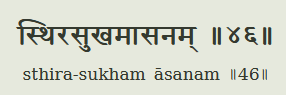
The classic teachings of yoga – taken holistically – are an invitation to develop skillful means. To learn through practice to rein together the forces acting within and without –  to become artful and harmonious co-creators. A sustainable  and integrated practice is built on working with our practices in harmonious proportions. The advantage of a sustainable practice is longevity – it stays with us our whole lives. In classical yoga practice this is ideal as it provides an enhanced relationship to our bodies and lives through times of change. The golden ratio establishes harmony and ease. It’s about  a state of interrelationship  which -like architecture -brings strength and stability.  In sutra 2.46 of his Yoga Sutra, Patanjali calls this the stable joyful seat. (tr. The seat should be stable and joyful).

What does this have to do with the koshas? A practice designed to address each of the koshas will create a stable practice in which all dimensions of ourselves become integrated.

To do this, we can construct a chart of the practices we want to explore that will develop each of the koshas. These are practices to bring the other parts of yourself into your practice is deliberate way.

Then select practices for each kosha that you would like to develop at a given time. Then, decide how much of each is appropriate to start out with and adjust it based on your needs at a given time – maintaining the presence of all five. Examples – when I was teaching yoga full time  asana was 1.5 hours a day and everything else was 5-10 minutes a day – or once a week or month. Now, my life needs less physicality and more inner peace. I meditate 45 minutes and my asana practice is sometimes only 20 minutes. You know that the practice is out of balance by your experience of the koshas. So, if I try to do 1.5 hours a day of asana right now – my mind chatter increases dramatically. If I tried to do an hour of meditation in my teaching days, I would fall asleep. Now, meditating awakens me. It’s important to note that it also needs to be in proportion to your lifestyle.  When I worked in corporate America, I also needed very intense asana.

You will know you are succeeding in creating a harmonious balance if your practice is sustainable (meaning – you are able to fulfill the personal commitment you have made over time) – and you will experience the wondrous personal transformation that is the promise of yoga – and that will occur not only on your mat but also in your relationships, your work, your creativity your passion. 

Introduction to the Five Sheaths

The AnamayaKosha

The PranamayaKosha

The ManomayaKosha

The JnanamayaKosha

The AnandamayaKosha

If you would like to explore ways to work with the physical body to integrate the koshas, my associated newsletter will be posted on my facebook page for NatalieteachesYoga. To receive future newsletters with alternate approaches to what is shared in the blog post, please sign up below. I promise you will not receive marketing emails from me. These are designed to be educational.

Processing…
Success! You're on the list.