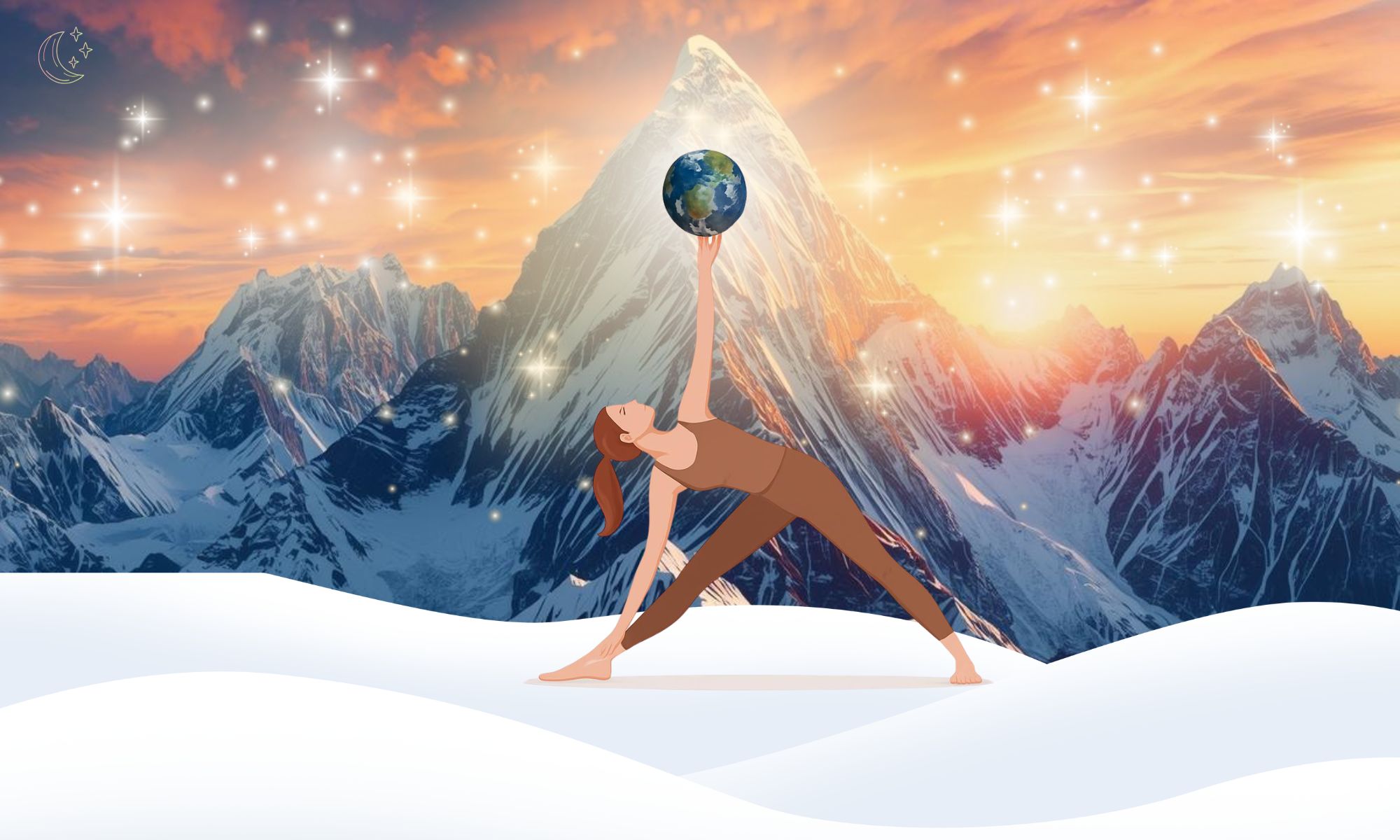
Why practice ?ย 

Classical yoga is designed as an intentional practice where the body is used as a vehicle to know ourselves,  to realize ourselves in our whole true nature. This true nature is also referred to as the state of yoga, and it arises as we cease identifying with the fluctuations of the mind. When that happens….

เคคเคฆเคพ เคฆเฅเคฐเคทเฅเคŸเฅเคƒ เคธเฅเคตเคฐเฅ‚เคชเฅ‡เคฝเคตเคธเฅเคฅเคพเคจเคฎเฅ เฅฅ เฅง.เฅฉ เฅฅ

tadฤ draแนฃแนญuแธฅ svarลซpe’vasthฤnam || 1.3 ||

(3) Then the seer abides in His Own Nature   /*tr. Swami Satchitanada*/

Our true nature is understood to extend beyond the limits of our physical form, and  so we could think of the practices as tapping into, unlocking or accessing understanding, wisdom and creative capabilities which are beyond the firings of the neurons in our brain.  This experience of the state of yoga releases the time bound functions of ourselves, of the cells of the body, revealing the brightness of the mind. This occurs without force. Alignment of the body mind spirit in practice opens the portals.  When that occurs we discover potential – Our true nature or pure organic potential.  It’s mystical and it’s not religious.  These capacities extend  beyond the individual self so there is a recovery of knowledge.  There is also recovery of our connection with what we might call the universal mind and that in turn illuminates our connection to all other minds. (Sutra 4.4 personal translation) It’s also described as yoking to God  – an old fashioned word for something which is still contemporary and relevant. There are many ways to parse out this experience.

As yogiโ€™s we are invited to travel the path to these results in a very personal way. 

The nature of discipline called for to achieve these ends is self-discipline.  Yoga is a study in self-discipline which, as it evolves, opens into a realm of refined and elegant personal sovereignty. Like any other craft, such a discipline invites us to do a little planning, a little strategy.  Yoga is not a “do your own thing kind of freedom” as much as it is a “refined structure revealing the deeper nature of personal freedom and potential” thing, and so it requires a little thought,  a little work, a little investigation. And so every year as I prepare for the practice of the coming year I ask myself – why practice?  Why practice in this way?  Why not throw it all away and take up pickleball like everyone else?

First I tend to approach this intention setting with an understanding of whatโ€™s happening.  What am I called to respond to? 

The world around us is currently in overdrive.  There is nothing peaceful and still about it.  In the world of business in particular โ€“ globalization, technology and competitive drive has created an environment which is sharp, deceptive, requiring of constant attention and agility , adaptation and perpetual learning, and study.  That what we are dealing with โ€“ if not for ourselves, for our children.  How can we craft practice goals for the year within that chaotic landscape?

This is how I see it, your place in the landscape is unique, You will have your own unique constellation of chaos. But the question the practice raises remains the same. And the faith piece is discovered through practicing in unlikely landscapes. The landscape dictates the curriculum. I encourage you not to make it all about fixing the chaos, but instead, about aligning you more deeply with your heart. It requires a relinquishment of the shoulds. “I gained weight this year. I should do a hard sweaty practice. My heart responds no, actually you need to relax, rest your nervous system and go out for walks, and maybe paint some yantras…because they are fun!” The new year is an invitation to tune into your heart and listen to what it longs to do. The faith piece or shraddha is the faith that that all the different shapes of yoga are designed to support us. So we might ask – what does yoga do and how can I work it to apply it in my present circumstance?ย  What is my central intention?ย  And what tools in my toolkit will help me fulfill that intention?

Establishing a clear intention to pursue the bountiful rewards of yoga – that accessing of an infinite well of understanding, creativity, healing, joy, love and accomplishment- supports a swifter approach the goal. Patanjali tells us:

Yoga Sutra 1.21: Tฤซvra-saแนƒvegฤnฤm ฤsannaแธฅ

เคคเฅ€เคตเฅเคฐเคธเค‚เคตเฅ‡เค—เคพเคจเคพเคฎเคพเคธเคจเฅเคจเคƒ เฅฅ เฅง.เฅจเฅง เฅฅ

tฤซvrasaแนƒvegฤnฤmฤsannaแธฅ || 1.21 ||

/*To the keen and intent practitioner this Samadhi comes quickly.*/tr. Swami Satchitananda

/*Success is nearest to those whose efforts are intense and sincere.*/tr. Osho

Samadhi, this full consciousness of the yoga โ€“ nothing lacking, is realized most quickly when we embrace that fullness as a goal.  When we know where we are going (having intent) will get us there faster.  Yes, Samadhi is a meditative state to be attained, but if sustained we can be in it all the time.  After all Swami Satchitananda, a renunciate, built Yogaville, Omโ€™d at Woodstock and changed the landscape of American thought – no small feat. Osho โ€“ having attained Samadhi at an early age rocked the world with his radical upending of spiritual norms.  And so did Gautama Buddha. A well-structured yoga practice supports a well constructed life. We may not become celebrities, but our impact is vast nonetheless.

So, our intentions are critical for they will contribute to the world in a bigger way than we might imagine.

Because of the subtle and vast nature of yoga, I’ve found it works best to set a subtle intention for the year, i.e. to understand peace or creation or backbending rather than to stop being angry, manifest a stack of gold and do urdhva dhanurasana. Being specific in that way can also yield quick results but the subtler intentions bring effective long term healing and transformation. For starters you may want to peruse Patanjali’s Yoga Sutras, third padah, The Vibhuti Padah. This entire section of the book speaks of attainments in yoga. Used incorrectly they can be obstacles to the larger goal of samadhi, but the study of their nature will give you an idea of how yoga works. It’s a list of what you might concentrate on, and the result that comes from concentrating in that way. By focusing on an elephant, you gain the strength of an elephant and so on. An intention is no more than what you will concentrate on, invite in, seek out and look for. Maitri or friendliness, how about that for an intention!

Because yoga is affilitated with the realms beyond desire, I invite you to craft your intentions beyond desire. Consider it as the study that it is, and trust that what the practice will evoke and bring forth from you and for you will grace you with sublime understanding of that which you seek to be creating.

Scroll down for some thoughts about posts the coming year. For in depth commentary on some of the aspects of the blogposts, please sign up for the newsletter. This isn’t for marketing, ever. It’s designed to be thought provoking and inspire you to practice yoga!

Processingโ€ฆ
Success! You're on the list.

******************************************************************

We will continue our journey through the map of the Sankhya Philosophy in the coming year, with a resurrection of the โ€œAbout the bodyโ€ teachings and some structured discussion on asana. 

It took us a year to get through the senses.  Of course it did, the sense organs are anchored into dense physical reality totally bound by the slowest vibration of earth.  Slow is not badโ€ฆbut we are talking the material world, very dense – which is also not bad.  But as we move our way up the chart to the highest states of consciousness the subtleties of energy, mind and beyond โ€“ we become lighter, less time bound.  Itโ€™s a science fiction idea, but something the human race is embracing.  Time is fluid and can be our tool rather than our master.  As we explored the senses we discovered means to manage them, and to purify them.  These sense directed practices continue as long as we are practicing, although we may engage with them differently along the way.  In January we will begin with our exploration of the elements, also materially but molecular and energetic as opposed to solid.  If you have ever had acupuncture youโ€™ve worked with your elements.  And now, acupuncture is a common feature of medical practice.  We are all lightening up! 

Through the portal from Taste to Smell: Discernment and the Smell of the Earth

Once in the early 2,000โ€™s a friend and I were strolling and shopping and dining in Greenwich Village when we came upon a small store โ€“ just a nook really,  filled with shiny clear rectangular  glass bottles stacked on wooden shelves.  A slender handsome hipster  with an untucked navy blue  shirt and somehow stylishly elegant slightly faded jeans manned the counter. 

The bottles and their rectangular labels  were identical except for the unique word on each label: Rain, Dirt, Beach, Grass, Dog among the hundreds. 

In response to our outburst of giggles he offered sample smells.

A gentle whiff of โ€œdirtโ€;and I was transported out of the concrete canyon and back to a time before vanity when I was a simple child doing what kids like to do.  Play in the dirt.

Tobacco โ€“ was my 1960s father and warm leaves drying in the sununveiling a thought of slaves picking leaves in the hot, hot sun and wondering if the fragrance for them was unpleasant.   Grass in a bottle was a little too much for both of us, but we both loved tobacco which was mysterious and somehow informative.

 Smell emerges in the first trimester of a babies development, the smell of placenta and mother creating a subtle earthy unbreakable bond. 

Smell evokes memories – our minds travel far into our histories and possible futures in the presence of them.

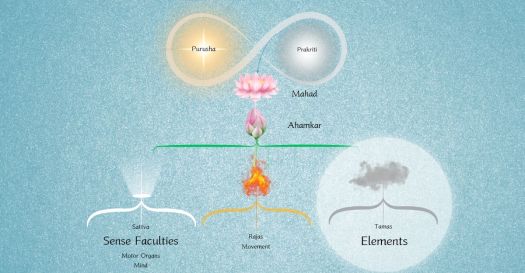
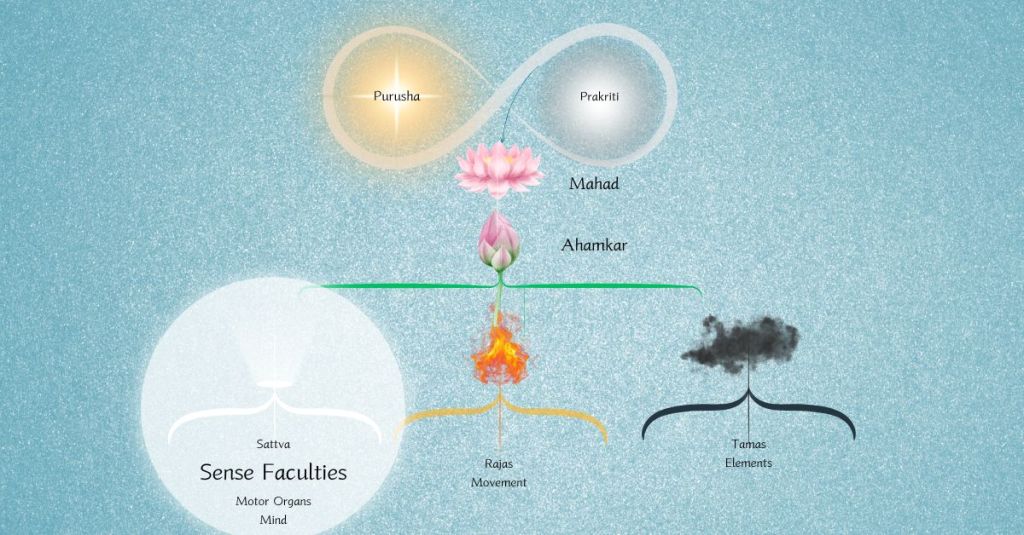
The Sankhya philosophy as commonly mapped on a chart lines up, as a bottom line foundation, the senses.  Our connection to the physical realm moves directly through the five sense faculaties and the elements.  This will become more meaningful as we move beyond the dense material realm.

Smell is associated with the subtle element earth โ€“ the root chakra, the mooladhara chakra โ€“ the focal point of the yogiโ€™s shift of attention from the material realm upward from the realms of hunger and fear into more exalted states of consciousnessโ€ฆinto awareness, understanding and wisdom. Smell evokes an understanding of ourselves in time, life and death, and anchors us in the physical.

In that essential awakening into that experience of life and death we meet the kaladanadaโ€ฆthe yogiโ€™s alchemical transformation from death to immortality.  Yes, they actually mean that.  Hatha Yoga was a practice of alchemy โ€“ a system based on primordial wisdom encoded in the sound of Om.  Smell and itโ€™s essential nature is a portal into the ancients through the root chakra, like an uplifting song moves us upward, so does an uplifting fragrance.

Of course for asana yogis, in the days that we still did thisโ€ฆwafting incense โ€“ burning of the earth, the smell of smoke offered up to the heavens โ€“ an invitation for ascended beings physical and non-physical to bless us with our wisdom. 

Processingโ€ฆ
Success! You're on the list.

An Intro and a Segue from Touching to Hearing; CAN YOU HEAR ME? TURNING TOWARDS THE SOUND OF OUR OWN HEARTS

For those of you first joining us, we have been looking at our yoga practices from the perspective of the classical teachings found in the yoga philosophy and related  texts.  Weโ€™ve been using the classical teachings as maps to explore in our asana practice.  The segment we are working on now is a segment on the Indian philosophy of Sankhya. The map of the philosophy is shown below.  It is a map of the cosmos from a particular perspective.  We are journeying from the densest most physical aspects of our being to the most ethereal aspects of the cosmos.  Technically, Sankhya and Yoga are completely separated disciplines. Philosophy, science, art are evolving permutations of interwoven understanding. All philosophies, sciences and arts touch one another, influence one another evolve one another. There is likely more than one map of Sankhya floating around the universe or the internet and ideas – like philosophy – end to cross-pollinate.  Most yoga teachers learn about Sankhya philosophy in teacher training and I believe itโ€™s worth exploring the subtle influence that it may have exerted in the understandings of yoga that have emerged.  This post is  not intended as a definitive answer to the question of what the Sankhya philosophy is, but  rather how we can use an understanding of the philosophy to deepen our lived understanding of ourselves and our yoga practices.

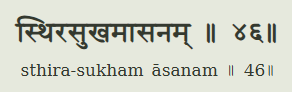
/*Patanjali advises in Yoga Sutra 2.46:

*เคธเฅเคฅเคฟเคฐเคธเฅเค–เคฎเคพเคธเคจเคฎเฅ เฅฅเฅชเฅฌเฅฅ

sthira-sukham-ฤsanam ||46||

The posture should be stable and easeful. */

We began our exploration of Sankhya and the senses with the sense of touch.  Weโ€™ll be moving into an exploration of the sense of  hearing, but first there are a few additional notes on working with the sense of touch as it relates to our asana practice. 

As we develop our practices and deepen our awareness of touch – subtle deep unconscious patterns of tension will surface in our practice.  There are two  facets of working with that tension: first, to release those deep stress patterns and second, to move our bodies (on and off the mat) in ways that minimize the creation and holding of those stress patterns.  When practicing asana it is important not to pile new tension patterns on top of the more deeply held ones in our eagerness to make a posture happen.

The primary way that a new tension pattern is created is to skip a level of your practice.  To push through to a new level of posture before you have released the tension patterns which were revealed in a lighter expression of the posture.  This results in a strain in the body’s tissue as opposing forces are exerted on a joint, muscle, or a specific pattern in the fascial tissue. 

/*Forcing a yoga posture to happen is not the same as transcending pain and pleasure.*/

To stay in ease is to stay in union (yoga).  To force, grip or struggle is to create separation โ€“ dis-ease.  Anti-yoga.  To stay in ease doesnโ€™t mean you donโ€™t work hard, stay focused and open to the idea that you might be able to accomplish something beyond your own expectations. Consider this: a certain amount of ease is necessary for any kind of success.

And then there is pranaโ€ฆ

As we begin to develop discernment through the sense of physical touch in our practice, we will develop a sensitivity that allows us to detect sensory experiences which originate in prana.   Prana is a subtle substance –  an energy. Like sound it travels and has a felt presence.  Like sound it manifests in a spectrum where different beings can perceive different levels of it.  We know that different species perceive sensory information very differently.  That would be true of perceiving prana as well.  Some of us can feel it acutely, some of us canโ€™t feel it at all. 

And finally, sound is prana.  Sound in various subtle degrees travels through the body in pranic circuits. This is why it reveals and heals. When we touch the ground with our hands and feet the channels are charged with the heartbeat of the earth.

As we begin to  develop this feeling/touch/sensory discernment we discover that some of what we perceive as physical pain are  actually blockages or fragilities which on the level of prana.

The clarity of the pranic channels (which we can feel through our sense of touch) is directly related to our capacity to hear and to hear on a subtle level (and to see and to smell and to taste, etc).  This is the connection between touch and hearing in the yoga practice

/*Notice in the modified Sankhya Chart below the position of the sense on the map*/

CAN YOU HEAR ME? TURNING TOWARDS THE SOUND OF OUR OWN HEARTS

The Sankhya philosophy provides one possible map of the terrain of the mind body spirit connection.ย  The journey can unfold as a trip where we elevate from tuning in only to our dense physical senses to opening to consciousness awareness in different degrees.ย  This would commonly be called a journey towards enlightenment.ย  The journey can also unfold as a kind of embodiment โ€“ where ย – like shamen we experience an inspired state of consciousness and then bring the inspiration down, to ย embody and manifest that experience in the physical world.ย  One of the most โ€œknownโ€ experiences of this process of bringing spirit into physical reality is the manifestation of deep healing by various saints and mystics.ย  Probably the most well-known is Jesus โ€“ whose miraculous healings of lepers and raising of the dead are probably heard of by most people, even if they donโ€™t believe in it.ย  If you dig enough there are tales of other such healings by saints in all traditions.ย  A more secular example of bringing spirit into the physical ย occurs with inspired innovations i.e. the light bulb or the personal computer.ย  Sometimes innovation is planned and sought after but often itโ€™s inspired.ย 

The senses are the interface of consciousness with the manifested world on the Sankhya map.ย  We touch the world, we hear the world, we see the world and so on. The yogi seeks to manage and clear the senses so that they do not interfere with our exploration of elevated states of consciousness.ย  Yoga seeks to do what some people turn to substances to do. Drugs can numb the chatter of the mind, drugs can ignite an expanded state of consciousness. But with yoga, these states are attained through personal mastery, awareness and skill (i.e. mastering and clearing the senses). It removes the dependency that substances require.ย  Yogis are independent.

Mastery of sound is an essential practice in hatha yoga. The yogin becomes unified with the ancient wisdom that permeates the deep silence connected with through practice.ย  Then, the yogin aspires to staying harmoniously anchored in that โ€œvibrationโ€ as they move through the world. This vibrationย  is depicted by the ubiquitous symbol Om. ย Asana practice is both the ground of that harmonic synchrony and the training for sustained experience of that harmonic synchrony. ย There are a variety of practices used to cultivate this experience.ย  ย In a very straightforward everyday way on the mat we can begin to condition ourselves to excel in these practices. ย The training goes something like this:

  1. ย External sounds capture our attention on the mat. Some are quite annoying โ€“ talking, ย sirens, construction, airplanes, and other machinery.ย  The yogin trains themselves to turn their attention from the external noise and into the inner landscape. There they meet another layer of sound –
  2. Internal Chatter. Much of the chatter of our minds originates in experiences and beliefs rooted in the past with ย no place in the present.ย  With mindful attention the yogi becomes aware of their absorption in this inner chatter and they train themselves to turn inward to a still deeper level of sound –
  3. Subtle Sounds โ€“ The yogin hear many subtle sounds within as their pranic channels are cleared through consistent practice – Bells, whistles, drums and humming.ย  In time, willingness to turn away from these distracting subtle sounds reveals yet a deeper subtler sound –
  4. Nadam โ€“ Most likely this is the subtlest sound that a human can hear.ย  It is steady, constant, ever present โ€“ like white noise but more ethereal.ย  Tuning our attention away from more overt inner and outer noises to this perpetual background hum within and without, and allowing ourselves to relax into it begins a process of deep healing and awakening.ย  ย But even thenโ€ฆthe yogin turns their attention away from it, and towards something deeper –
  5. The Anahata Nadam.ย  The anahata nadam is the sound that is complete silence without vibration – the โ€œunstruckโ€ sound.ย  Here the yogin relaxes into the deep silence and in stepwise fashion becomes absorbed in expanding stages of continuity.ย 

We practice this way on the mat, and asana facilitates this process.  In later stages conscious meditative seats (asanas) like virasana and padmasana support the process of allowing ourselves to be absorbed in silence without falling asleep or going unconscious.

In practicing asana how can we support this process in personal practice or when leading a class?ย  The playlist.ย  The playlist is most beneficial at early stages of this process.ย  When the chatter of the mind is overwhelming and distracting on the mat that is when you want the playlist.ย  It is also really helpful in situations of deep unconsciousness where you or those you are leading just canโ€™t stay present โ€“ which is a result of trauma.ย  It either wakes you up or calms you down.ย  The goal is the experience of yoga โ€“ this inner absorptive yoking.ย  Itโ€™s important to be aware that familiar music or verbal music will have associated mental imagery and memories and feelings that will be ignited and itโ€™s likely to draw the attention outward rather than inward.ย  Sometimes this is needed.ย  But just be aware that a rousing playlist of familiar or exciting song might operate in a way that is inconsistent with your goal.ย 

When you create your playlists consider creating a musical experience which propels the journey towards yoga and not to somewhere else.  Like a soundtrack to a movie you are building up to something:   an experience of yogic absorption for yourself or the student. 

Indian classical music is designed to take you to this point, so itโ€™s very useful. But if you use it too early in the process it can be too potent and cause a different kind of distraction.

Consider as well that when we take in music it can nourish us; pure sounds are deeply nourishing.ย  Note that doesnโ€™t always mean soft or new agey.ย  A pure note is a perfect note.ย  Some music that we love has those pure notes, and you will develope an ear for the perfect note as your practice unfolds.ย  Allowing yourself to be nourished by deep clear sound is deeply healing as well as enlightening, and this can lead to all kinds of magnificence if approached with an open mind and heart.ย 

The anahata nadam โ€“ that deepest level of sound resides in your spiritual heart.  Thatโ€™s where the note of silence lives.  So when you touch it for the first time as a yogi you will feel and hear the spiritual heart. 

Working with sound in asanas is accessible to all  and an abundant and beautiful experience. 

Each blog post has an associated newsletter. No marketing! I promise. To sign up to receive the next email please do so below. To see the accompanying newsletter for this post, they are publicly posted on my facebook business page for NatalieteachesYoga.

Processingโ€ฆ
Success! You're on the list.

sankhya

เคธเค‚เค–เฅเคฏเคพ

The next map of yoga we will explore here  is the Sankhya Philosophy, which maps the terrain from the unified field of awareness to our experience as individuals evolving into knowing ourselves and our place in the infinite universe .  We can use it as a guide when we traverse the landscape of the material realm seeking evolution, liberation and peace.  We can also use it as a guide as we carve out a pathway for the rivers of pure consciousness to irrigate the material world that we inhabit.  Translating into ideas of enumeration and rational decision making it appears to be a highly analytical discipline disconnected from our day to day experience on the mat.  But that is far from true.  Right discipline in practice creates a crucible for personal actualization. It paves the way from a life lead astray by every passing influence to alive of personal sovereignty โ€“ aligned with the will of the infinite, limitless omnipotent loving intelligence that goes by many names.

For an image of the map please see this website Sankhya.

The journey of begins with awareness of our senses – direct experience of our awareness touching the physical world via the physical body and ascends through the individual mind, the collective mind, the wisdom mind through the experience of pure duality (me and you) and then in some maps to a unified field of consciousness beyond that duality.  We will take the map beyond duality  to the unified field. 

The heart of healing exists in the unified field. The heart of yoga (which is a dualistic discipline) is  experienced in communion with the unified field. 

/*Whereas the koshas or sheaths (the five dimensions of you) are really about the individual, the Sankhya philosophy is about reorienting ourselves into our  unique place as an individual within the cosmos.  .  The practice of yoga asana leads us directly towards, aligns us with and supports us in staying steadfastly and joyfully engaged in this  ever changing process of reorientation. /

The practice  we will be exploring is using asana to bring awareness to the senses, our actions, the general qualities of nature, the individual mind, the cosmic mind, our sense of separation and yoga or unification.

As we explore these maps we gain the ability to attain mastery in asana, meditation and life. 

How can we start to consider this?  It helps to explore a new sense of our physicality.  Some approaches to yoga work with transcending the physical body, but to really understand ourselves as living as physical bodies from a yoga perspective โ€“ we start with physical awareness.  When we start our yoga practice we are entombed in conditioning about our physical bodies- that the body is shameful or exalted or it drives us or it pulls us down.  The flavors of conditioning about the body are infinite.  Open Vogue, or Greyโ€™s Anatomy or unpack your experience of gym class in the second grade. Conditioning is subtle โ€“ Habits are generated in our unconscious.

What we do want to do is to open our field of awareness as we practice. Just by giving up preferences and practicing observation we will come to know our conditioning and we may choose to leave it behind.  What thought arises as we tumble out of tree posture โ€“ or come down with a thud out of headstand.  We will break down some of these explorations in asana as we walk through the map in the coming months โ€“ but for now you can get ready, just by beginning to notice what arises on and off the mat in a very general sense.

If you’d like to receive a newsletter prepared in conjuction with these posts – illuminating other facets and designed to prompt your creative thinking about your practice Please sign up below. And I promise…you won’t be subject to marketing emails from me…this is just about talking about yoga.

Processingโ€ฆ
Success! You're on the list.

Pratiแนฃแนญhฤyฤแนƒ:ย  A Path to Deep Asana เคชเฅเคฐเคคเคฟเคทเฅเค เคพเคฏเคพเค‚

/* To be established in a posture is not about the first time you attain it (although that is to be deeply celebrated). Itโ€™s about accessing it โ€“ in an aligned fashion – consistently enough that you can grow your alignment within it.*/

Pratiแนฃแนญhฤyฤแนƒ โ€“ to become established in, is a fundamental concept in yoga practice as described in Patanjali Yoga Sutra. Itโ€™s pervasive; we are guided to become established in focus, established in asana, established in meditation, established in practice, established in the experience of yoga and more.ย  Once you are established your path is clear and unfolds quickly.ย  Yoga does not peak with ย the experience of a flash of insight ย (although thatโ€™s a valuable thing โ€“ itโ€™s not the heart of the practice)ย  itโ€™s about establishing oneself in an internal landscape where insight continuously fosters understanding.ย  To be established in a posture is not about the first time you attain it (although that is to be deeply celebrated). Itโ€™s about accessing it โ€“ in an aligned fashion – consistently enough that you can grow your alignment within it. You are relating to the posture.ย  Deep asana then becomes about that capacity to deepen the alignment of the posture over time. There is an eternal, never-ending quality to establishment.

/*All postures become deep postures through the practice of inhabiting them in time with greater alignment and understanding.*/

Deep asana then is relative to oneโ€™s own body – built into the practice over time and emerges with stability and ease. ย Itโ€™s always advisable to step back in practice when one cannot stay stable in the posture with relative ease.

A first mode of deeper alignment which unfolds in deep asana is internal โ€“ at the level of the ManomayaKosha or mind body.ย  Presuming you have placed yourself well to begin with in a posture, discomfort is first addressed in the mind.ย  ย This does not mean that sensations are ignored โ€“ on the contrary paying attention to them is awakening into the posture.ย  But, for most of us, placing our bodies in these unusual positions isโ€ฆodd. So, there is likely to be psychological discomfort and an opening up around that is very powerful.ย 

For those with backgrounds of dance, gymnastics or similar โ€“ ย expectations take the place of the psychological discomfort of the novice.ย  They are constructs in the mind that obscure new levels of awareness. For the physically experienced deep asana is an invitation to shift into a new awakening, into a different kind of bodily experience โ€“ experiencing the shape without judgement, competition or preconceived ideas about how the body should inhabit the shape.ย  Discomforts, expectations and conquests are often mental constructs which obstruct our ability to deepen an asana in a fresh, organic and transformative way.ย  They are subtle forms of fear and resistance.ย  If we meet them with spaciousness we come to know and understand ourselves and the posture differently .ย 

/*Discomforts, expectations and conquests are often mental constructs which obstruct our ability to deepen an asana in a fresh, organic and transformative way.ย  They are subtle forms of fear and resistance.*/

Tuning in is a second mode of shifting into deep asana.ย  Feeling the ย body holistically in space and time. Inner body scans, proprioceptive or kinesthetic exercises and relaxing around resistanceย  deepen ย the holistic sensory experience of an asana โ€“ not once, but continually.

A third mode of establishing into deep asana is time   – time in the posture and consistent practice of the posture daily, weekly, or monthly  – over months, years, or decades.  Doing less, more consistently will yield a deeper result than doing a lot intermittently.  Itโ€™s seldom a linear process, but the intention to consistency will do much for establishing your practice.  A general rule for this is that your posture should always be stable and easeful.  So, find your edge at 1 minute, 2 minute, 3 minute and so on.  Work the mental resistance first.  Begin to identify what your mental resistance looks like. 

Example:  Iโ€™ve been working a 10 minute Virasana, and 10 minute Padmasana (5 minutes each side)  sequence for months now.  In those postures Iโ€™d been meditating in a whole new way.    A new proprioceptive awareness (my body in space) of my pelvic girdle began to emerge.  This week as I take the postures for practice my mind bounces all over the place โ€“ itโ€™s hard to get on my mat to begin with and there is no peace. Breakthrough time โ€“ time to step back a little and cultivate the stability of mind that I need, that I can reside in consistently enough to experience the breakthrough.  I modify the postures slightly in consistent, strategic ways. A little extra propping, a little extra warming up.  I reduce my time in them at the beginning of practice and then engage them again for a short time at the end of practice. 

This kind of strategic approach to asana, while analytical, lays the ground for being your own teacher in a personal practice in an illuminated way.ย  You may find other ways to bring strategy and discipline to your practice, but I encourage youโ€ฆgentlyโ€ฆto experiment withย  modes of deepening your understanding of your practice.ย  It leads to deep healing and a different flavor of progress.

Thank you for reading! Concurrent with each blog post a newsletter is issued. If you’d like to receive it please sign up below. This is not sued for marketing purposes. If you’d like to support financially, my designs are available on Redbubble. See designs on menu. New designs are available on Redbubble within a day or so of being posted here.

Processingโ€ฆ
Success! You're on the list.

Deep Asana:ย  Understanding your joints for deep healing.

/*This is the first in a four part series about deep asana and creating personal sequences*/

In the classical schools of yoga  the healing power  of deep asana Is a powerful rubric. By deep asana I am referring to the classical spinal twists (i.e., ardha matsyendrasana) , lotus (padmasana), and all the various binds. These deep squeeze postures  are purposeful in their intensity in a way that large muscle strengthening or or deeply relaxing postures are not. To practice them effectively we must understand how the joints function โ€“ and what the deep asana does.

For example

  • Padmasana. The knee is a hinge joint. The ankles are mosaics of tiny interconnecting bones that move like ball bearings to allow maximal movement โ€“ but the structural stability of the joint is borne of the way those joints fit together, fettered together by soft tissue – fascia, ligaments, and such. When we do padmasana โ€“ the deep exterior rotation of the legs must emerge from the hip socket to protect the functioning of knees and ankles. If we are practicing padmasana – we must balance that deep external rotation of the hip joint with stabilizing strengtheners in our standing practice. Particularly the internal rotations which connect the feet to the earth through the inner ball of the foot. These inner rotations, while originating in the connection to the earth travel up the leg and into the hip socket and pelvic girdle. Stable hip/pelvic girdle structure is needed for standing, walking, and containing the soft internal organs. a correctly activated inner rotation will strengthen whatever tiny muscles which need to be strengthen and will establish ease in those which have been acting as supports when it wasn’t their function. So we must understand how the joints work โ€“ and what their purposes are and how they relate to each other.

  • Ardha matsyendrasana: Vertebrae spin gently in restricted rotations around a central axis. Each vertebrae is uniquely shaped for its perfect placement in the column of the spine. The shape of each one contributes to the moving stability of the spinal column. When performing a deep asana form of a spinal twist, we are invited to gently explore the boundaries of the vertebral rotation. The spine must be lifted and relatively straight to protect the cushions between the vertebrae, which protect the nerves. Remember important components of the nervous system travel through the spine โ€“ your central nervous system! A classical spinal twist is not a full body twist โ€“ it is focused on the spine. The sacrum does not participate in the twist. Instead, the pelvic girdle is given structural stability built from the ground up  either through knowledgeable activation of appropriate muscles or through placement i.e., through sitting squarely on the ground.
  • The pelvic girdle is a bunch of moving pieces. Yep. Itโ€™s not a solid bowl. Those moving pieces can misalign in subtle ways,  impact the alignment of the vertebral column and the ability of the vertebrae to turn. The stability in the alignment of your feet and knees supports this structure. Building the asana from the ground up helps with this.
  • Deep asana is not forceful asana. There are lineages where force was used effectively but I am not aware of any school that currently works successfully with dramatic deep quick forceful adjustments into deep asana. Gentle knowledgeable movement is as effective, if not more so in the stable ongoing practice of deep asana.
  • Modifications and simpler postures are your friends. You can design or learn modifications that will work specifically on the joints which present obstacles in our practice of deep asana. In my practice I work for long periods of time in specific modifications to open joints, like the hip or the  turning of the spine, before moving into the deep posture.  This creates a stable foundation for the deeper postures which is safe and healing.

Note โ€“ the relationship with deep asana is very different for those who started yoga before their bone structures were fully formed.  Yeah. The sacrum is still forming up to age 5. For the rest of us – bones remain malleable through our lives, depending on lifestyle โ€“ so change is possible, but it is best executed gradually and consistently.

Through the squeezing wringing of soft tissues in the joints – deep seated stress patterns in the fascial tissue are released, and structures in the pranamayakosha โ€“ the pranic body are aligned and rejuvenated. After squeezing โ€“ fresh blood and prana will flow into a joint to nourish it.

I encourage you to learn more about the way your joints function and how each posture โ€“ in its classical form (see Light on Yoga) articulates the joints. Note that Mr. Iyengar who is depicted in the pictures in this book, started very young. Heโ€™s like a gumby. But you can still see external rotations, internal rotations, deep spine twists, in those classical images. Gently experiment with what you learn โ€“ so it is no longer an academic exercise to learn about your yogic anatomy.

My Mailchimp newsletter is sent concurrently with this – it’s designed to illuminate related ideas to stimulate understanding and spark your thinking about your practice. I promised I won’t send you marketing emails.

Processingโ€ฆ
Success! You're on the list.

The Yogic Anatomy of the Koshas:ย  The Anandamaya Kosha and Deep Rest

The Anandamaya Kosha, the subtlest of the koshas, bodies, sheaths, or dimensions is commonly translated as the โ€œBliss Bodyโ€ .ย  Commonly is an important adverb here โ€“ as โ€œnandaโ€ is joy in form and โ€œaโ€ is often creates an opposite.ย  So, bliss, yes, but bliss beyond form. For starters we may want to distinguish between the state of ecstasy that can be achieved by high vibing our practices through drugs, music, endorphins, and exuberance โ€“ and the state of ecstasy which is Ananda.ย  Form bliss is not bad.ย  “Beyond form” bliss just does different things.ย  The nature of the Anandamaya Kosha is akin to a subtle sweet flickering sense of joy.ย  This sense of joy arises from the experience of wholeness that is characteristic of this beautiful dimension.ย  It is the origin of all healing, the resolution ofย  pain and trauma, and the understanding of our place in the universe – that we are infinitely unique, genuine, and valuable.ย  And so is everyone else.ย  If we are in touch with the Anandamaya Kosha we donโ€™t have to force, cultivate or practice such a perception.ย  We experience it continuously and directly.ย  There is no perception of competition in the world as true sparkling confidence emerges.

ย The Anandamaya Kosha is timeless.ย  I once apologized to a student for a short ล›avฤsana (Corpse Posture) at the end of class. โ€œNo problemโ€, he responded, ย โ€œWhen Iโ€™m in ล›avฤsana Iโ€™m in a timeless space ย – so as far as Iโ€™m concerned, it doesnโ€™t matter whether it was 2 minutes or 10.โ€ ย ย Good point!ย  So, why does the amount of time that we spend in ล›avฤsana or meditation โ€“ immersing ourselves in the Anandamaya Kosha โ€“ matter?

The koshas arenโ€™t layered upon one another, but co-existent โ€“ like light, sunbeams,  oxygen molecules and wind โ€“ they influence our life experience in an integrated way.

In the Anandamaya Kosha โ€“ in that space of wholeness โ€“ all the experiences that fracture us donโ€™t exist (sadness, fear, lack of self-worth).  The time we spend in the Anandamaya Kosha is a time of deep rest for all aspects of our being.  Resting in the Anandamaya Kosha there are no mental gymnastics, no triggers to the nervous system.  For whatever amount of time we are there.   This is why everybody looks 10 years younger after a retreat.  It is a rest in deep peace.

Practice Tips

  1. ย Practice ล›avฤsana or Yoga Nidra practice.ย  Use a timer to avoid being worried about time.
  2. Meditation.ย  Once again โ€“ use a timer to avoid being worried about time.

Jnanamaya Kosha: Understanding the Past and Future in the Ever Present Now

The Jnanamaya Kosha or Wisdom Body is the 4th (sheath, dimension, body, or kosha) identified in the koshic anatomical maps of yoga. This kosha will reveal experience beyond time and duality, where our differences collapse and a single moment contains eternity.,

Wisdom is timeless and of the moment, and at a certain point absolute right and wrong dissolve into merely moments and choices. It arises from a perception that is not hampered by opinion.ย  When we are living in wisdom we move in synchrony with the workings of the universe.ย  This reflected in Patanjaliโ€™s Yoga Sutra III:53

Through samyama on a particle of time and that which proceeds & succeeds it comes discrimination. –Translation by Swami Vivekananda.

A very simple way to consider this is a โ€œflashโ€ of  inspiration.   That unmistakable flood of everything all at once โ€“ like a holograph โ€“ you see the big picture and the details.  That holographic non-linear experience is a hallmark of the Jnanamaya Kosha. Sometimes itโ€™s so subtle that you donโ€™t even know the wisdom is moving through you, you just find yourself turning left when you need to go left. 

Time and sequence still exists in the JnanaMaya kosha โ€“ but  linear cause and effect dissolve into a bigger picture.   The Jnanamaya Kosha has a โ€œzoom outโ€ quality โ€“ the picture, the details and the context transform the sense of where you are in space and time.

My teacher used to say โ€œYou have to go way in to go way outโ€.  The deeper you go into your subtle interior in your yoga practice, the more expansive and holistic your vision is.  It is startling, surprising, and awesome.  Itโ€™s likely to be totally ordinary at the same time. 

Through the revelations contained in the Jnanamayakosha we may find the missing piece in the puzzle of our lives.  It reveals a deep understanding of an individualโ€™s path through life, in the context of a billion other lives.  We may see the advantage of a shift in direction.  We are invited into intention,  discernment and awareness. The Jnanamaya Kosha is beyond time.

At the same time it reveals the macro operations of the universe. 

In the Jnanamaya Kosha โ€“ the large and the small lose their meaning.  A smile to a stranger on the street appears as significant as performing brain surgery โ€“ depending on the intent.  We may feel a sense of power and magnitude โ€“ as if our destinies are vast and magnificent, but all that wisdom asks of us may be a moment of kindness.  Because we see that an act of kindness, or honesty, no matter how small, is a magnificent act.

Here we meet our personal journeys to grow into deeply wise humans. It’s the intersection of the timeline of our lives with universal truth and how things work. 

The greatest obstacles entering the Jnanamaya Kosha is the hesitance we have that a vast degree of change that may be asked of us as the result of encountering this level of truth. It may arise as skepticism, dismissal of the numinous, or commitment to conventional paradigms, our mental constructs, busyness, and ambition of all kinds. Some methods which open the portal to the Jnanamayakosha are:

  • Well-done ย Vinyasa ignites and reveals the Jnanamaya Kosha. Cultivate a pure and steady rhythm of breath. a healthy amount of detachment, and an ability to flow well and wisely through the sequence of postures.ย  Surrender intoย  synchronization with the rhythm of breath andย  establish the practice in an elevated intention.
  • Study how things work through the laws of karma. This breaks our conventional paradigms of why things happen and opens us up to new ways of understanding cause and effect. Hold these laws lightly for the best effect.ย ย 
  • Patanjaliโ€™s Yoga Sutra provides many, many prescriptions for practice and the expected results.ย  For example โ€“ the sutra above.ย  Many of them are simpler to practice than this one.
  • Study of music
  • Study the ย yoga asana sequencing of ย the great masters.

For a few additional suggestions for playing in the Jnanamaya Kosha please see my Facebook page – NatalieteachesYogaโ€ƒfor the most recent newsletter – or subscribe and it will be delivered to your inbox next month.โ€‚No ads, I promise!โ€‚Just substantive yoga content.โ€‚

Processingโ€ฆ
Success! You're on the list.

Digesting Trauma: The powerful medicine of Hatha Yoga

โ€œPTSD is the inability to forgetโ€ Dr. Ellen Kirschman 1

Yoga is the cessation of the fluctuations of the mind.  Patanjali Yoga Sutra 1.1

Yoga is the ability to digest and transform our thoughts, feelings, memories, experiences so that our clear and sacred selves will shine through. 

Yoga is the experience of peace that emerges when our afflictions have been overcome.

Yoga is the freedom that arises when our past has been processed and we are fully present.


Some experiences are very difficult to forget. If, at the moment of trauma, we are unable to fully process and digest what is happening, that experience can be held in the physical body (also identified as the “Food Body” or Anamayakosha in the yogic anatomy map known as the koshas) ย  Sometimes food and experiences are indigestible – uncomfortable, painful, difficult to absorb and process.โ€‚The blockage caused by the undigested matter can obstruct our access to the other dimensions of our being – our knowledge, wisdom and joy.โ€‚Through understanding this we can use our yoga practices to digest and healโ€‚traumatic memories stored in the physical body.

There is an inherent wisdom in the process of yoga practice.โ€‚ We can buzz along in our lives just fine, and then, one day the blockage becomes apparent and it’s time to heal it.โ€ƒ We’re not defective if we have issues.โ€‚It’s pretty normal to have a degree of trauma in the body.โ€‚Yoga is a fairly sophisticated method of dealing with the residue of trauma due to this potential for digestion and transformation.โ€‚We could just manage our symptoms.โ€‚But we are invited – in the deeper levels of yogic experience – to transform what was not processed into insight and wisdom.โ€‚It takes deep willingness, an open mind and considerable bravery.โ€‚But the rewards are ample.โ€‚

There are multiple approaches to processing trauma through our yoga practices.โ€‚We may be experiencing the impacts of the trauma on the psychological level, and our yoga practice restores equilibrium.โ€‚But going further -โ€‚by breathing and feeling and observing arising memories on the mat – if we are spacious enough – the memories are released from the physical body and new understandings of experiences awaken.โ€‚The experiences are digested.โ€‚We can use those same techniques in the presence of physical symptoms which can range from tightness to chronic misalignment to pain or acute injury.โ€‚Wise presence in yoga asanas can resolve physical trauma through wise practice.โ€ƒThis can be approached well by experimenting gently with specific postures that intuitively, or as a result of research and study, we believe will be related to the anatomical structures involved.

 As we use the tools of yoga to train ourselves to be calm, objective and present to reawakened memories of traumatic feelings and experiences, we mitigate the cycles of recurrence.  We move from the experience of being bombarded by the repetitions of memory and subconscious patterning to creating new relationships with the stories we have lived.  The charged quality of the memory becomes neutralized and laid to rest.   We may never โ€œforget itโ€ – but we can transform it into a tool for awakening, empowerment, deepening and opening to ourselves.

Just as digested food nourishes the cellular structure of the body, digested experiences nourish the stability and robustness of our neural landscape.  They transform the very mechanisms through which we understand the world.  We become less fragmented, less dissociated and more integrated.โ€‚We become whole.โ€‚In this way well-practiced yoga can be a powerful tool in the management and healing of PTSD. โ€‚Some tips for practice are:

  • Work with the quality of your breathing.โ€‚Begin with gentle but focused breath and explore how the different qualities of breath impact the physical experience of a posture.โ€‚Look for the quality of breath that is in effect when you feel a muscle release.
  • Work with the quality of your attention.โ€‚Begin with gentle but focused presence.โ€‚You can train specifically in this – take a posture and maintain your gentle receptive attention on the bones, the flesh, the skin.โ€‚The moment when a memory arises and you stay present rather than becoming lost in it is a power point for healing.
  • As you train in this way, it’s important to notice your reactions to the awakening of trauma in the body.โ€‚The most common reaction is to attempt to control it by pressing it down – psychologically, physically – a kind of powering through.โ€‚This will interfere with the release of stress pattern in the body.โ€‚Allowing is key to healing.โ€‚Assuming you are practicing with moderate intensity – you can practice staying present to discomfort.โ€‚Of course – don’t force.

.Through a carefully cultivated yoga practice we reintegrate the parts of ourselves that have been locked away through trauma.  No longer fractured in this way, we become whole, and the experience of PTSD can be transformed into a process of healing.  While the knowledge of the experience still remains, we are now no longer bound by it. 

  1. https://www.youtube.com/watch?v=IT40YKvLBTg โ†ฉ๏ธŽ

Each blog post is associated with a related newsletter with related commentary, suggested reading and maybe a song or two.โ€‚โ€‚You can find past newsletters (and the current one )on my Facebook page NatalieteachesYoga.โ€‚Sign up below to receive newsletters in your inbox. No marketing, I promise!โ€‚Just content that I hope will open your mind to deeper levels of yoga practice.โ€‚

Processingโ€ฆ
Success! You're on the list.