स्थूलस्वरूपसूक्ष्मान्वयार्थवत्त्वसंयमाद् भूतजयः ॥४४॥
sthūla‑svarūpa‑sūkṣmānvayārthavattva‑saṁyamād bhūta‑jayaḥ
By Samyama on their gross state, svarupa (essential nature), subtle state, interconnect3edness and nature of serving a purpose – mastery over the bhuta – elements(PYS, 3:44, tr. J. Houston)
ततो णिमादिप्रादुर्भावः कायसंपत्तद्धर्मानभिघातश्च ॥४५॥
tato ’ṇimādi‑prādurbhāvaḥ kāya‑saṁpat tad‑dharmān‑abhighātaś ca
From that, the emergence of such powers as becoming minute, etc. perfection of the body, and non-affliction by its constituents. (PYS, 3:45 tr. J. Houston)
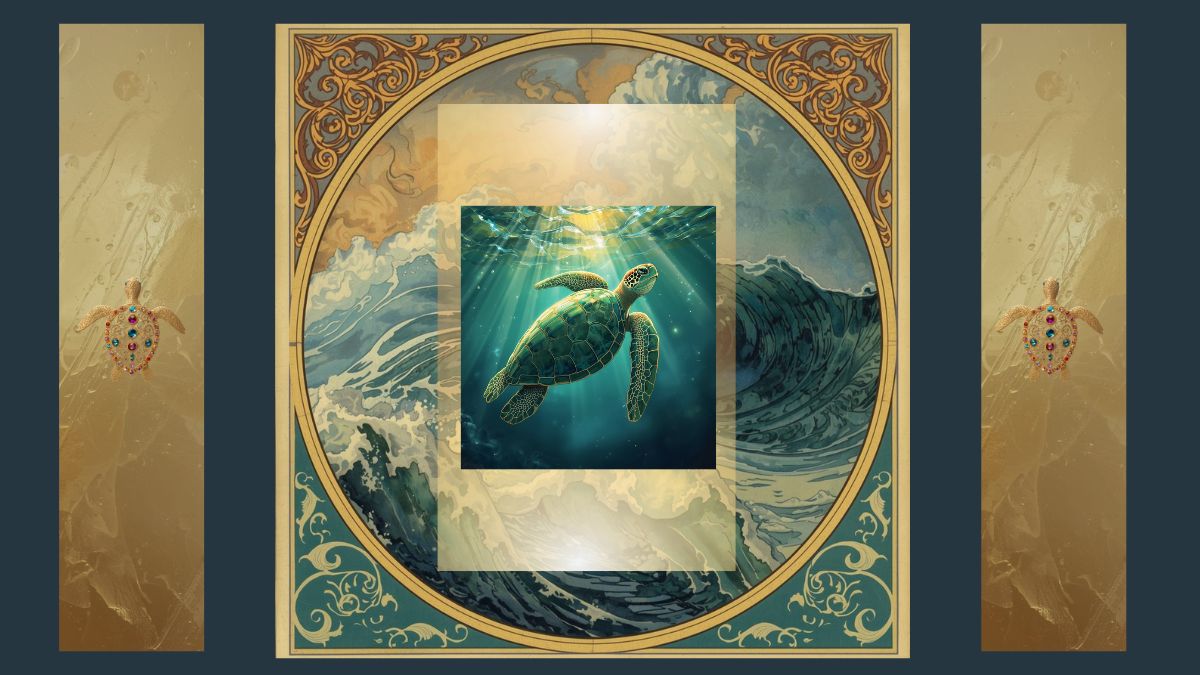
One morning at 4 AM by the sea in Costa Rica, some students, all females, and I hopped in a van and traveled to a beach where it was reputed that the sea turtles would come to lay their eggs. We stood for while waiting. First one then two, then a few then many of the magnificent beings, bodies reflecting forms of a time before time, mothers, began to pull themselves out of the deep blue ocean with their front flippers. Dragging their enormous water-built bodies from the sea and up far on the beach to dig their nests. Young new mothers and ancient ones, dragging themselves up to the shore to lay their precious eggs. One in particular drew our attention, for she was clearly the oldest and slowest of them all and was missing a front flipper. Her arduous journey up the beach to participate in the creation of new life was breathtaking. No Goddess I’d ever seen painted matched the feminine dignity of this, not so little, sea turtle. After her eggs were laid, she dragged herself back towards the ocean, pausing frequently to rest from the extraordinary effort.
Awe and deep love swirled around the group as we quietly murmured our support, “Go, you can do it!’ peppered with warm quiet laughter and tears. In that moment we were no longer tortoises and humans – we were all just women – joined in that specific essence we could not name and maybe had never known before right now, seeded within the nature of the divine feminine. That we would drag ourselves up the beach to dance with that cycle of life. Mothers by role or not, we all shared something magical. It was like meeting ourselves and finding out exactly how beautiful we were.
When she made it to the shoreline, we let out a cheer and watched her swim off into the deep blue sending her well wishes for a safe journey to an unknown destination. As we gazed at the waves after she was gone with wistful sighs —all of a sudden —a flipper emerged from beneath the waves to give us a little wave. I know I wasn’t alone in picturing our friend, diving deep into the vast primordial waters where she lived fully potent, fully alive, fully divine.
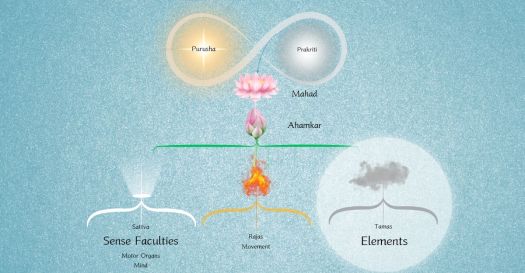
In our studies of the Sankhya chart, we now move through the water element, or Apas (waters -which include physical, cosmic, primordial as well as the qualities of water as expressed in the universe). From the perspective of the Sankhya Chart – the elements serve as a ground level of interaction of consciousness with the physical plane; that is one thing. But we can look to the sage wisdom of Master Patanjali in his yoga sutras to guide our yogic exploration of the elements. In PYS, Patanjali advises contemplation of the elements from gross to subtle, so we bring to this exploration an open-mindedness and curiosity which exceeds the limits of our physical senses. With curiosity and imagination, we ask…what are the qualities of water?
One of the first things we might notice is that the water element overflows with the quality of infinite abundance. Surprising, as we do experience scarcity – there’s always water somewhere, in some form, just not maybe where we are. And often it’s right here and we overlook it. Scientists tell us that there is a fixed amount of water in the universe – infinitely recycling through the rain cycle – it doesn’t disappear. And this is related to one of its other somewhat magical properties – it retains its molecular identity as water even when it turns into ice and steam.
Its primordial nature is felt as a healing source deep in the psyche of perhaps in all beings. While domestic cats are reputed to have an aversion to water, my Lakshmi, a pure bred feral (on the basis of some of her talents and behaviors, I don’t think her ancestors were domesticated) would sit in the California rain with a look of wonder and joy on her face – even when the warm dry apartment was mere feet away from where she sat.
The theory of evolution proposes that we emerged from the water – and transformed into beings who could breathe air and walk on the land. The waters containing life existed long before we did.
Water exhibits cohesion – the particles of water have this amazing ability to cling together. The molecule H20 is held together by covalent bonds. That means hydrogen and oxygen aren’t bound together because they are each missing something. That kind of bond can be easily split apart. Water molecules are bonded through mutual sharing and attraction to each other’s atomic nuclei. Do I hear divine essence? I guess this is why the great mystical seers of the universe have associated the energy of water with relationships. Like the recycling quality of water, no relationship ever ends; it just becomes invisible for a while and life goes on eternally, whether through multiple lives or one eternal life. That’s how we know that love is always behind relationship – even if its current form is not healthy.
Water embodies continuity – you can’t break it -even the solid quality of ice is a miracle. It’s not like flour- granular as many solids are. Water retains that continuity as it changes shape.
Water is nourishing, it has the ability to permeate and bind tissues. Nutrients can dissolve in water. This is how it becomes a container for life.
The water element is commonly associated with forward bends. The meridians which run along the spine are associated with the bladder, and a most excellent forward bend will stretch and tonify those oh so important kidneys resting on your lower back.
Let’s consider Uttanasana – it’s stretches the entire back of the body along that bladder meridian. If you crease at the hips (rather than rounding your back) your kidneys will get that gentle toning quality.
Do you envy that person next to you who flops down in the forward bend. Don’t. Sometimes they would really like to feel that same stretch you do! That floppy quality points to an imbalance in the water element either at the physical or chakra level. Likewise, if you can’t touch your knees and all the bend is happening at the rib cage, well, that would also indicate some imbalance there.
I invite you to explore how you take your water and the quality of your forward bends rather than find a gimmick that tricks the body into what appears to be a better external picture of a forward bend. The lines of the body should appear fluid, coherent and in some schools the linking of the hands and feet are used allowing circulation of “energy”.
It’s a beautiful thing about asana that we can learn to detect imbalances in the body and address them before they become fixed and stagnant. These observations bring the ability to cultivate health. Patanjali notes this as well!!
Consider how the structure of the connection to the earth impacts your Uttanasana. If your weight is not evenly distributed through the feet (and maybe the hands) it throws off the continuity of the stretch through that back of the body. This is just an example of the organic wholeness cultivated and expressed in asana.
And on a final note…water is VAST. As I swam through the months of preparation and study of this element I realized that all I could do was a take a little cup of the ocean and suggest that you explore the realms of water in your own life, because there is so very much more to discover….🌍
**“As a yoga practitioner and teacher, I honor that yoga arises from a rich and ancient Indian tradition. I’ve learned that these teachings carry a depth and integrity that can support profound healing when approached with respect for their origins.
At times I use poetic or contemporary imagery to make concepts more accessible, but my intention is always to point students back toward the roots of the practice — the classical texts, the Vedic worldview, and the wisdom traditions that shaped yoga. These sources offer a depth that modern interpretations, including online content, can’t always provide.
My hope is to inspire curiosity about the lineage itself, and to encourage students to explore yoga’s original teachings as a living source of insight and transformation.”**